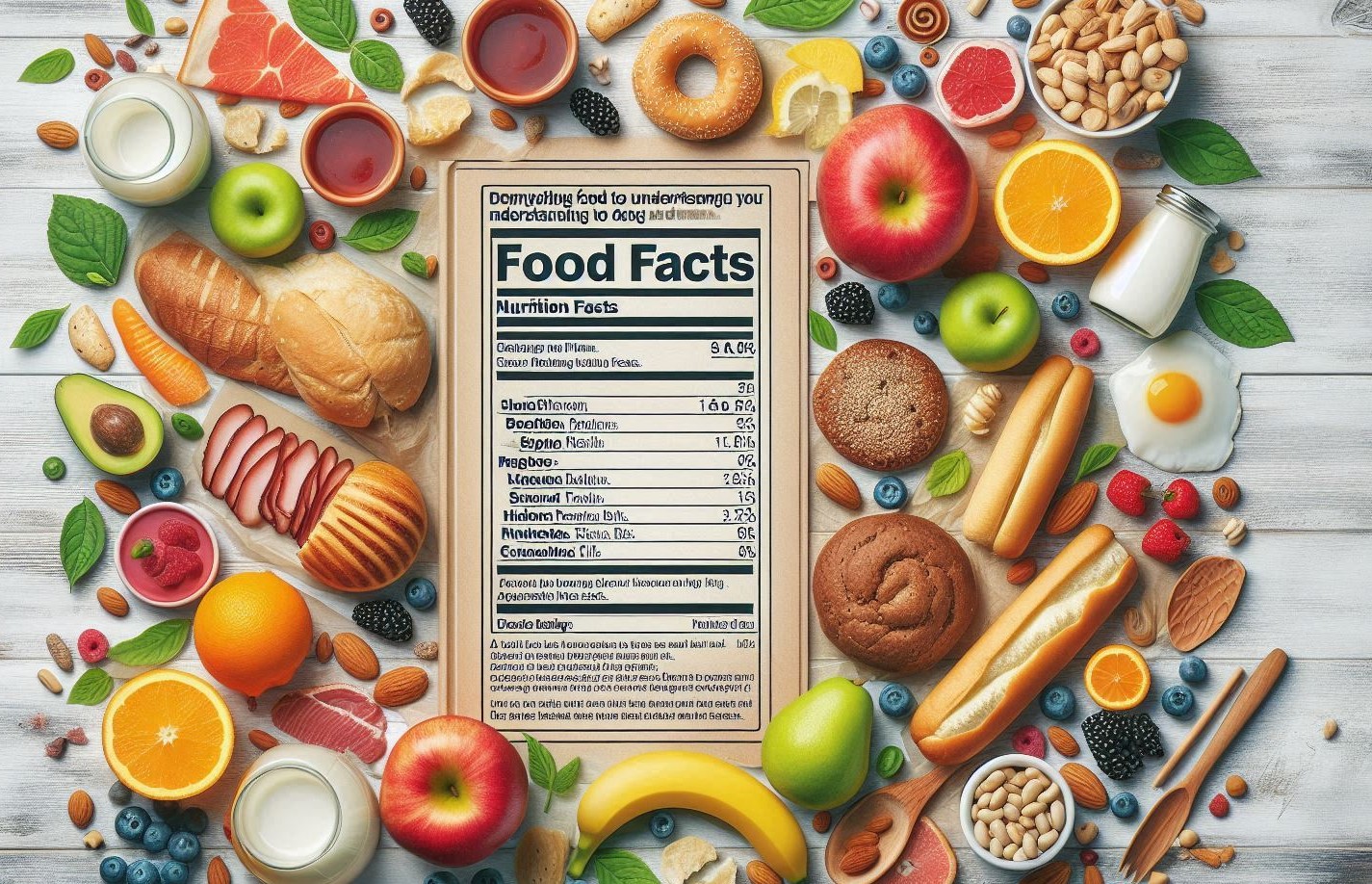
Walking down a supermarket aisle can feel like navigating a sea of confusion. Packages scream “Low-Fat!”, “High in Fiber!”, “A Good Source of Calcium!”, and “All-Natural!”—but what do these claims truly mean for your health? The most reliable tool at your disposal is not the marketing on the front of the package, but the standardized, science-backed Nutrition Facts panel on the back or side.
For many, this panel is a cryptic chart of numbers and percentages that is often glanced at and quickly dismissed. However, learning to read and understand the Nutrition Facts label is one of the most empowering steps you can take for your health. It allows you to make informed choices, compare products effectively, and align your food purchases with your nutritional goals, whether that’s managing weight, reducing sodium, increasing fiber, or simply eating a more balanced diet.
This guide will serve as your comprehensive decoder ring. We will break down the Nutrition Facts label, section by section, transforming it from an intimidating table into a clear and actionable source of information.
The Anatomy of a Nutrition Facts Label
In 2016, the U.S. Food and Drug Administration (FDA) rolled out an updated Nutrition Facts label to reflect new scientific information and make it easier for consumers to make informed choices. The changes were fully implemented by 2020 for most manufacturers. The new design emphasizes elements that are of greater public health concern today, such as added sugars and calorie content.
Let’s dissect the label step-by-step.
Serving Size & Servings Per Container
This is the most critical starting point, as all the information that follows is based on this single measurement.
- What it is: The serving size reflects the amount of food that people typically eat at one time. It is now presented in larger, bolder font to be more noticeable. It is provided in both household units (e.g., 1 cup, 2/3 cup, 1 packet) and its metric equivalent (e.g., 228g).
- Servings Per Container: This tells you how many servings are in the entire package.
- Why it Matters: This is where many people go wrong. You must ask yourself: “Am I eating one serving, two servings, or the entire container?” If you eat two servings of a product that lists 150 calories per serving, you are consuming 300 calories—and double the amounts of all the other nutrients listed.
- Example: A pint of ice cream might list the serving size as 2/3 cup and the servings per container as 3. If you eat half the container (which is common), you are consuming 1.5 servings and need to multiply all the nutrient values by 1.5.
Pro Tip: Always check the serving size first. It grounds every other piece of data on the label in reality.
Calories
Located directly beneath the serving information, calories are a measure of how much energy you get from a serving of the food.
- What it is: The number of calories listed is the total energy provided per serving.
- Why it Matters: Managing weight is fundamentally about balancing calories consumed with calories burned. The new label makes this number more prominent.
- General Guide:
- 40 Calories is considered low.
- 100 Calories is considered moderate.
- 400 Calories or more is considered high.
It’s important to remember that the source of calories is just as important as the number. Two hundred calories from a sugary soda affect your body very differently than 200 calories from a handful of nuts, which provide protein, fiber, and healthy fats.
The Nutrients – What to Limit
The next section of the label details nutrients that, when consumed in excess, are linked to chronic diseases. The FDA (2016) emphasizes these as “nutrients to get less of.”
- Total Fat: This is broken down into two main sub-categories:
- Saturated Fat: This type of fat is found in animal products like red meat, butter, and cheese, as well as in tropical oils (coconut and palm oil). Diets high in saturated fat can raise “bad” LDL cholesterol levels and increase the risk of heart disease.
- Trans Fat: The label now explicitly states “0g” if a product contains less than 0.5 grams per serving. However, it is crucial to also check the ingredient list for “partially hydrogenated oils,” as this is the primary source of artificial trans fats, which are especially harmful to heart health. The FDA has determined that partially hydrogenated oils are no longer “Generally Recognized as Safe” (GRAS).
Dietary Guidance: Aim for low amounts of saturated and trans fats. Unsaturated fats (not required to be listed, but often found in nuts, seeds, avocados, and olive oil) are the healthier choice.
- Cholesterol: While the body needs some cholesterol, it also produces it on its own. For many years, dietary cholesterol was heavily restricted, but more recent guidelines, such as those from the 2015-2020 Dietary Guidelines for Americans, have placed less emphasis on limiting dietary cholesterol for the general population, focusing instead on saturated and trans fats. However, individuals with certain health conditions like diabetes or heart disease may still need to monitor their intake.
- Sodium: This is simply the mineral salt. While the body needs a small amount of sodium to function properly, most people consume far too much.
- Why it Matters: High sodium intake is strongly linked to high blood pressure (hypertension), which is a major risk factor for heart disease and stroke.
- General Guide: The American Heart Association recommends no more than 2,300 milligrams (mg) a day, moving toward an ideal limit of no more than 1,500 mg per day for most adults. A product with 400mg of sodium per serving is considered high.
- Added Sugars: This is one of the most significant updates to the new label. It distinguishes between sugars that are naturally present in the food (like the lactose in milk or the fructose in fruit) and sugars that are added during processing.
- What it includes: This encompasses sugars like sucrose (table sugar), high-fructose corn syrup, honey, maple syrup, and other caloric sweeteners.
- Why it Matters: Added sugars contribute “empty calories”—calories with no essential nutrients. High intake is linked to weight gain, obesity, type 2 diabetes, and heart disease.
- Dietary Guidance: The Dietary Guidelines for Americans recommend limiting calories from added sugars to less than 10% of your total daily calories. For a 2,000-calorie diet, that’s less than 200 calories, or about 50 grams (12 teaspoons) of added sugar.
The Nutrients – What to Get Enough Of
These are the dietary components that many people do not get enough of, and consuming adequate amounts can help improve health and reduce the risk of some diseases.
- Dietary Fiber: Found in fruits, vegetables, whole grains, and legumes, fiber is crucial for digestive health. It helps maintain bowel regularity, can help you feel full, and can assist in lowering cholesterol and blood sugar levels.
- General Guide: Aim for at least 25-38 grams of fiber per day.
- Vitamin D, Calcium, Iron, and Potassium: These are now required to be listed on the label because they are considered “shortfall nutrients” in the American diet.
- Vitamin D & Calcium: Essential for bone health.
- Iron: Necessary for carrying oxygen in the blood; deficiency can lead to anemia.
- Potassium: Helps regulate blood pressure and is important for nerve and muscle function.
The Percent Daily Value (%DV)
The %DV is your guide to whether a nutrient in a serving of food is high or low. It is based on a standard daily diet of 2,000 calories, which is a general benchmark, though individual calorie needs may vary.
- How to Use the %DV:
- As a General Guide: The FDA (2016) provides a simple rule of thumb:
- 5% DV or less of a nutrient per serving is considered LOW.
- 20% DV or more of a nutrient per serving is considered HIGH.
- For Nutrients to Limit (Saturated Fat, Sodium, Added Sugars): Look for foods with a low %DV. A %DV of 5% or less is a good target for these.
- For Nutrients to Get Enough Of (Fiber, Vitamin D, Calcium, Iron, Potassium): Look for foods with a high %DV. A %DV of 20% or more is an excellent source.
- As a General Guide: The FDA (2016) provides a simple rule of thumb:
- Comparative Shopping: The %DV is incredibly useful for quickly comparing different products without having to do mental math based on serving sizes. You can instantly see which cereal has more iron or which soup has less sodium.
Important Note: The %DV for protein is generally not required unless a specific claim is made (e.g., “high in protein”). This is because protein deficiency is not a public health concern for the general adult population.
Decoding Nutrient Content Claims
The front of the package is often filled with marketing claims. The FDA regulates these terms, which have specific definitions.
- Free: Contains an insignificant amount of the specified nutrient. (e.g., “Fat-Free” means less than 0.5g of fat per serving).
- Low:
- Low Calorie: 40 calories or less per serving.
- Low Sodium: 140mg or less per serving.
- Low Fat: 3g or less per serving.
- Lean and Extra Lean: Used on meat and poultry products to describe fat content.
- High/Rich In/Excellent Source Of: Contains 20% or more of the %DV for that nutrient per serving.
- Good Source Of: Contains 10-19% of the %DV for that nutrient per serving.
- Reduced/Less/Lighter: Contains at least 25% less of a nutrient or calories compared to a standard product. (e.g., “Reduced Fat” mayonnaise has 25% less fat than the regular version).
- Light/Lite: Can mean one of two things: 1) that a product contains 1/3 fewer calories or 1/2 the fat of the regular product, or 2) that the sodium content of a low-calorie, low-fat food has been reduced by 50%.
Be cautious with claims like “Natural,” which have no formal definition for most foods, or “Made with Whole Grains,” which may only contain a tiny amount. Always verify these claims with the Nutrition Facts panel and ingredient list.
The Ingredient List: The Ultimate Truth-Teller
While the Nutrition Facts panel gives you the quantitative data, the ingredient list provides the qualitative story. Ingredients are listed in descending order by weight. The first two or three ingredients are what the product is primarily made of.
- Look for Short, Recognizable Lists: A short list with whole food ingredients is generally a sign of a less processed product.
- Identify Hidden Sugars: Added sugars can appear under dozens of different names. Be on the lookout for: sucrose, high-fructose corn syrup, barley malt, dextrose, maltose, rice syrup, cane juice, and anything ending in “-ose.” If several types of sugar appear in the list, it can be a sign that the product is high in added sugars, even if they are spread out down the list.
- Identify Whole Grains: Look for the word “whole” before grain names (e.g., “whole wheat flour,” “whole oat flour”). Terms like “wheat flour,” “enriched flour,” or “multigrain” (without the word “whole”) are often refined grains.
Putting It All Together: A Practical Example
Let’s compare two seemingly similar products: a “Healthy-O’s” cereal and a “Sugar Crunch” cereal.
Product A: “Healthy-O’s”
- Serving Size: 1 cup (40g)
- Calories: 150
- Total Fat: 2g (3%DV)
- Sodium: 150mg (7%DV)
- Total Carbohydrate: 30g
- Dietary Fiber: 5g (18%DV)
- Added Sugars: 1g (2%DV)
- Protein: 5g
- Ingredients: Whole grain oats, corn starch, honey, salt, mixed tocopherols.
Product B: “Sugar Crunch”
- Serving Size: 3/4 cup (30g)
- Calories: 120
- Total Fat: 1g (1%DV)
- Sodium: 200mg (9%DV)
- Total Carbohydrate: 25g
- Dietary Fiber: 0g (0%DV)
- Added Sugars: 12g (24%DV)
- Protein: 2g
- Ingredients: Corn flour, sugar, brown sugar syrup, corn syrup, food coloring, artificial flavor.
Analysis:
While “Sugar Crunch” appears lower in calories and fat at first glance, a deeper look reveals the truth. First, note the different serving sizes. More importantly, “Sugar Crunch” has a very high %DV for Added Sugars (24%) and no fiber. Its first ingredient is a refined corn flour, and sugar appears three times in different forms in the ingredient list. “Healthy-O’s,” on the other hand, is high in fiber (18%DV), very low in added sugar, and its first ingredient is a whole grain. It is the clearly superior nutritional choice for sustained energy and health.
Conclusion
The Nutrition Facts label is not a tool of restriction, but one of liberation. It cuts through the marketing hype and gives you the objective data you need to take control of your diet. By mastering the simple steps of checking the serving size, evaluating calories, limiting unhealthy nutrients (saturated fat, sodium, and added sugars), and seeking out beneficial ones (fiber, vitamins, and minerals), you can navigate the grocery store with confidence.
This knowledge allows you to make choices that are aligned with your personal health goals. You no longer have to be a passive consumer, swayed by clever packaging. You become an active, informed participant in your own well-being. The next time you pick up a food product, take that extra 30 seconds to turn it around. Read the label. Understand the story it tells. That small act is a powerful step toward a healthier you.
SOURCES
American Heart Association. (2021). How much sodium should I eat per day?
U.S. Department of Health and Human Services and U.S. Department of Agriculture. (2015). 2015–2020 Dietary Guidelines for Americans (8th ed.).
U.S. Food and Drug Administration. (2016, May 20). Changes to the Nutrition Facts Label.
U.S. Food and Drug Administration. (2018, May 18). The New and Improved Nutrition Facts Label – Key Changes.
U.S. Food and Drug Administration. (2023, February 28). Use of the Term “Healthy” on Food Labeling.
HISTORY
Current Version
Nov 18, 2025
Written By:
SUMMIYAH MAHMOOD