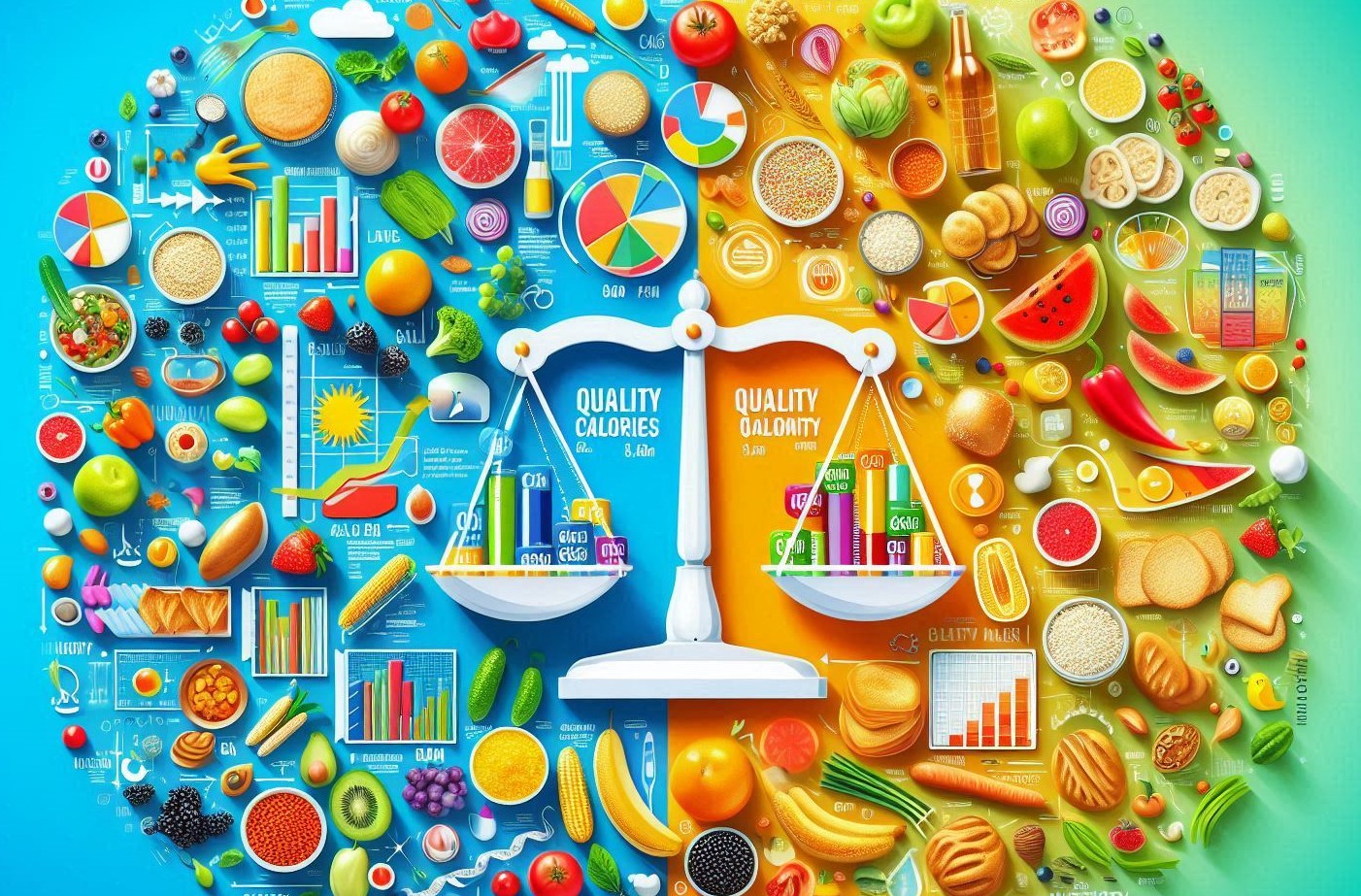
For decades, the cornerstone of weight management has been enshrined in a seemingly simple equation: calories in versus calories out. This model posits that if you consume more calories than your body expends, you will gain weight; consume fewer, and you will lose it. In its purest, thermodynamic sense, this principle is undeniably true. Energy cannot be created or destroyed. However, to reduce the complex, hormonally-driven, and biologically nuanced process of human metabolism to a simple arithmetic problem is a profound oversimplification. The emerging truth, supported by a growing body of scientific evidence, is that while the quantity of calories matters for weight, the quality of those calories is paramount for health, satiety, metabolic function, and sustainable weight management. The “what” you eat may be just as important as the “how much.”
This guide will deconstruct the myth of the calorie as a uniform unit of energy, explore the metabolic fate of different macronutrients, delve into the hormonal responses they trigger, and demonstrate why a focus solely on caloric quantity is a recipe for frustration and poor health, while a focus on quality leads to lasting vitality.
The Calorie Itself – A Flawed Measure
A calorie is a unit of energy, defined as the amount of heat required to raise the temperature of one gram of water by one degree Celsius. In nutritional terms, the calories we see on food labels are estimates based on the Atwater system, which assigns average values: 4 calories per gram for protein and carbohydrates, 9 calories per gram for fat, and 7 calories per gram for alcohol.
The first critical flaw in this system is that it is based on gross energy, measured by burning food in a bomb calorimeter. The human body is not an incinerator. It is a sophisticated, biochemical engine that must digest, absorb, and metabolize food, processes that themselves require energy—a phenomenon known as the Thermic Effect of Food (TEF).
- Protein: TEF is highest for protein, at 20-30%. This means for every 100 calories of protein consumed, 20-30 calories are used just to process it.
- Carbohydrates: TEF for carbohydrates is moderate, around 5-10%.
- Fats: TEF for fats is lowest, at 0-3%.
As Baron (2009) highlighted, a calorie of protein is not the same as a calorie of fat. If you consume 100 calories from chicken breast (protein) and 100 calories from olive oil (fat), your net energy gain from the chicken is only 70-80 calories, while from the oil, it is 97-100 calories. The “calorie in” part of the equation is already different based on the food’s source. This fundamental metabolic disadvantage is rarely accounted for on a nutrition label.
The Macronutrient Matrix – Beyond the Numbers
The journey of a calorie does not end with its absorption. Its source macronutrient dictates its metabolic pathway, hormonal impact, and ultimate fate in the body—whether it is burned for energy, stored as fat, or used for repair.
Carbohydrates: The Sugar-Starch-Fiber Triad
To label all carbohydrates as equal is perhaps the most damaging oversimplification in modern nutrition.
- Simple Sugars and Refined Starches: Found in soda, candy, white bread, and pastries, these are rapidly broken down into glucose, causing a sharp spike in blood sugar. This triggers a corresponding surge of the hormone insulin from the pancreas. Insulin’s primary job is to shuttle glucose into cells for energy. However, when levels are chronically high, its role shifts to fat storage. Ludwig & Friedman (2014) have extensively documented how high-insulin levels promote lipid synthesis in the liver and inhibit the breakdown of stored fat, effectively locking fat away in adipose tissue. This is the core of the “Carbohydrate-Insulin Model” of obesity.
- Complex Carbohydrates and Fiber: Found in whole grains, legumes, vegetables, and fruits, these carbohydrates are digested slowly due to their complex structure and high fiber content. Fiber, particularly soluble fiber, slows gastric emptying and glucose absorption, blunting the insulin response. Furthermore, fiber is a calorie that the human body cannot absorb. The calories listed for a high-fiber food like black beans or broccoli are not fully realized by the body. The gut microbiome ferments some fibers into short-chain fatty acids, which have beneficial effects on metabolism and inflammation, as noted by Sonnenburg & Sonnenburg (2015).
The Takeaway: 100 calories from a sugar-sweetened beverage and 100 calories from broccoli have vastly different effects on your hormones, metabolism, and satiety. The soda promotes fat storage and hunger, while the broccoli promotes stable energy, gut health, and fullness.
Fats: From Villain to Vital Nutrient
The low-fat dogma of the late 20th century mistakenly framed all dietary fat as a conduit to body fat. We now understand that dietary fat is essential for hormone production, brain function, and the absorption of fat-soluble vitamins.
- Trans Fats: Artificially created through hydrogenation, these are universally harmful, increasing inflammation, insulin resistance, and heart disease risk. They are a clear example of low-quality calories.
- Saturated Fats: Found in red meat, butter, and coconut oil, their role is more complex and context-dependent. While excess consumption is linked to health risks, their impact can be modulated by overall diet quality and individual genetics.
- Unsaturated Fats: Found in olive oil, avocados, nuts, and fatty fish, these are high-quality calories. Monounsaturated and polyunsaturated fats (especially omega-3s) reduce inflammation, improve cholesterol profiles, and support cardiovascular health. Estruch et al. (2013) demonstrated in the landmark PREDIMED study that a Mediterranean diet rich in olive oil and nuts significantly reduced the incidence of major cardiovascular events.
The Takeaway: 100 calories from trans fat in a processed cookie are metabolically damaging, while 100 calories from omega-3s in a piece of salmon are anti-inflammatory and health-promoting.
Protein: The Satiety and Structure Powerhouse
Protein’s high thermic effect and potent impact on satiety hormones like peptide YY (PYY) and glucagon-like peptide-1 (GLP-1) make it a cornerstone of quality calorie intake. Leidy et al. (2015) showed that higher-protein diets increase satiety, reduce obsessive thoughts about food, and decrease late-night desire to snack. Furthermore, adequate protein is crucial for preserving lean muscle mass during weight loss. Since muscle is metabolically active tissue, preserving it helps maintain a higher resting metabolic rate, creating a virtuous cycle.
The Hormonal Orchestra – It’s Not Just Willpower
The “calories in, calories out” model portrays the body as a passive vessel, implying that weight management is a mere act of willpower. This ignores the powerful hormonal forces that regulate appetite, energy expenditure, and fat storage.
The two key hormones are insulin and leptin.
- Insulin, as discussed, is the primary fat storage hormone. A diet high in low-quality calories (sugar, refined carbs) keeps insulin levels chronically elevated, signaling the body to store fat and making it difficult to access stored fat for energy. This creates a biological state of “internal starvation”—where the body has abundant energy stores but the cells cannot access them, leading to fatigue and increased hunger.
- Leptin is the “satiety hormone” produced by fat cells. It signals to the brain that energy stores are sufficient, thereby reducing appetite and increasing energy expenditure. However, chronic inflammation and high insulin levels can lead to leptin resistance. In this state, the brain becomes deaf to leptin’s signals, interpreting the situation as starvation despite ample body fat. This drives increased hunger and a suppressed metabolism—a biological defense against weight loss.
This hormonal perspective, championed by researchers like Lustig (2010), explains why simply eating less of a poor-quality diet is so difficult and often fails. The body fights back with powerful hormonal counter-measures. In contrast, a diet of high-quality calories—rich in protein, fiber, and healthy fats—naturally regulates these hormones, promoting satiety and making a sustainable calorie deficit far easier to achieve.
The Real-World Evidence – Beyond the Metabolic Ward
Critics of the “quality over quantity” argument often point to tightly controlled “metabolic ward” studies where people are fed precise diets. In these short-term studies, when protein is matched, low-carb and low-fat diets can produce similar weight loss based solely on calorie restriction. However, these artificial conditions do not reflect the real world, where hunger, cravings, and long-term adherence are the true determinants of success.
Free-living studies that focus on dietary patterns tell a different story:
- The DIETFITS Trial: This one-year randomized clinical trial by Gardner et al. (2018) compared healthy low-fat and healthy low-carb diets. The key instruction was to focus on food quality—to consume minimally processed, whole foods. There was no significant difference in average weight loss between the two groups. The most important finding was that both groups successfully lost weight by prioritizing high-quality foods, without mandated calorie counting.
- The PURE Study: This large prospective cohort study across 18 countries found that high carbohydrate intake was associated with a higher risk of mortality, while higher intakes of fat and protein were associated with lower risk (Dehghan et al., 2017). This suggests that the source of calories (high-carb, processed foods vs. whole foods containing fats and proteins) has a significant impact on long-term health outcomes.
These studies underscore that when people shift their focus to consuming high-quality, whole foods, their hormones and appetite regulate naturally, often leading to spontaneous calorie reduction and weight loss without the psychological burden of constant counting.
A Practical Framework for Prioritizing Quality
Shifting the focus from quantity to quality does not mean calories are irrelevant. It means that quality becomes the primary strategy for managing quantity. Here is how to implement this approach:
- Embrace Whole, Minimally Processed Foods: Build your diet around foods that look as they did in nature: vegetables, fruits, legumes, whole grains, lean meats, fish, eggs, nuts, and seeds.
- Prioritize Protein and Fiber: Include a source of protein and fiber with every meal. This combination has a powerful effect on satiety and blood sugar stability. Think chicken with broccoli, lentils with a side salad, or an apple with a handful of almonds.
- Be Smart About Carbohydrates: Choose carbohydrates that come in a “fiber package.” Favor vegetables, berries, legumes, and whole grains like quinoa and oats over refined grains and foods with added sugar.
- Choose Fats Wisely: Use olive oil and avocado oil for cooking and dressings. Incorporate avocados, nuts, and seeds. Limit processed vegetable oils and avoid trans fats entirely.
- Be Mindful of Liquid Calories: Sugary sodas, juices, and fancy coffee drinks are the epitome of low-quality calories. They provide no satiety, disrupt hormones, and are directly linked to weight gain and metabolic disease. Water, tea, and black coffee should be the primary beverages.
- Listen to Your Body: By eating high-quality foods, you can begin to trust your body’s innate hunger and satiety signals more than an external calorie count. Eat when you’re hungry, stop when you’re full.
Conclusion
The truth about calories lies in the synthesis of quantity and quality. The first law of thermodynamics is not violated, but it is insufficient. The human body is not a simple mathematical equation but a complex, adaptive biological system.
A calorie is not just a calorie. Its source dictates its metabolic journey—the hormonal cascade it triggers, the energy required to process it, and its impact on our satiety, health, and body composition. The outdated dogma of “calories in, calories out” has contributed to cycles of yo-yo dieting, metabolic dysfunction, and public health failure.
By shifting the paradigm from a myopic focus on caloric quantity to an empowered focus on food quality, we can move beyond restrictive dieting and towards a sustainable, nourishing way of eating. This approach works with our biology, not against it, fostering not only a healthier weight but also lasting vitality and well-being. The most effective “diet” is not a temporary period of caloric restriction, but a permanent upgrade in the quality of the calories we consume.
SOURCES
Baron, K. G. (2009). The Thermic Effect of Food: A Review. Journal of the American College of Nutrition, 28(3), 250–255.
Dehghan, M., Mente, A., Zhang, X., Swaminathan, S., Li, W., Mohan, V., Iqbal, R., Kumar, R., Wentzel-Viljoen, E., Rosengren, A., Amma, L. I., Avezum, A., Chifamba, J., Diaz, R., Khatib, R., Lear, S., Lopez-Jaramillo, P., Liu, X., Gupta, R., … Yusuf, S. (2017). Associations of fats and carbohydrate intake with cardiovascular disease and mortality in 18 countries from five continents (PURE): a prospective cohort study. The Lancet, 390(10107), 2050–2062.
Estruch, R., Ros, E., Salas-Salvadó, J., Covas, M. I., Corella, D., Arós, F., Gómez-Gracia, E., Ruiz-Gutiérrez, V., Fiol, M., Lapetra, J., Lamuela-Raventos, R. M., Serra-Majem, L., Pintó, X., Basora, J., Muñoz, M. A., Sorlí, J. V., Martínez, J. A., & Martínez-González, M. A. (2013). Primary Prevention of Cardiovascular Disease with a Mediterranean Diet. New England Journal of Medicine, 368(14), 1279–1290.
Gardner, C. D., Trepanowski, J. F., Del Gobbo, L. C., Hauser, M. E., Rigdon, J., Ioannidis, J. P. A., Desai, M., & King, A. C. (2018). Effect of Low-Fat vs Low-Carbohydrate Diet on 12-Month Weight Loss in Overweight Adults and the Association With Genotype Pattern or Insulin Secretion: The DIETFITS Randomized Clinical Trial. JAMA, 319(7), 667–679.
Leidy, H. J., Clifton, P. M., Astrup, A., Wycherley, T. P., Westerterp-Plantenga, M. S., Luscombe-Marsh, N. D., Woods, S. C., & Mattes, R. D. (2015). The role of protein in weight loss and maintenance. The American Journal of Clinical Nutrition, 101(6), 1320S-1329S.
Ludwig, D. S., & Friedman, M. I. (2014). Increasing Adiposity: Consequence or Cause of Overeating? JAMA, 311(21), 2167–2168.
Lustig, R. H. (2010). Fructose: metabolic, hedonic, and societal parallels with ethanol. Journal of the American Dietetic Association, 110(9), 1307–1321.
Sonnenburg, J. L., & Sonnenburg, E. D. (2015). Starving our microbial self: The deleterious consequences of a diet deficient in microbiota-accessible carbohydrates. Cell Metabolism, 22(5), 779–781.
HISTORY
Current Version
Nov 18, 2025
Written By:
SUMMIYAH MAHMOOD