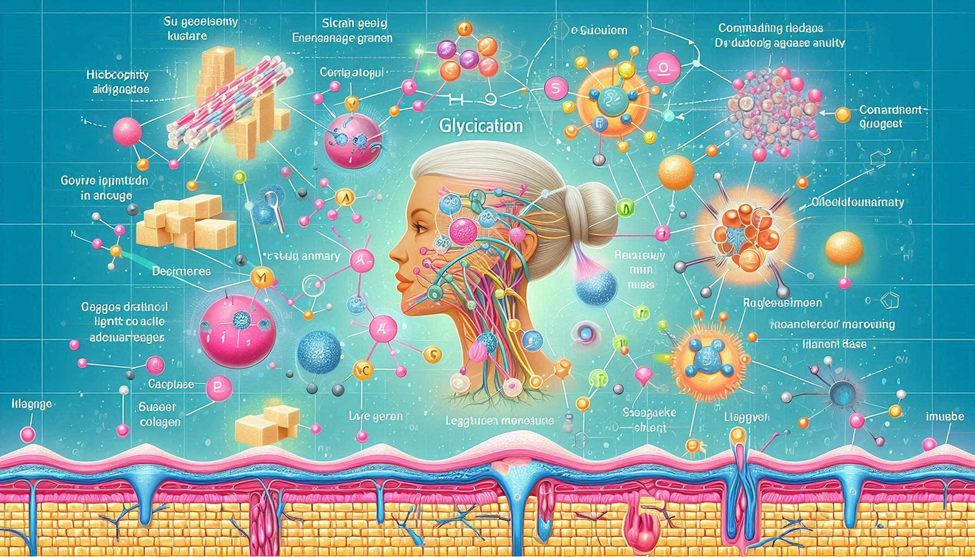
1. Introduction: The Sweet Slow Burn of Aging
Aging is inevitable—but its pace is not. While genetics set the foundation, lifestyle choices, particularly dietary habits, influence how gracefully our skin, tissues, and organs endure time. Among the most potent accelerators of visible and biological aging lies a quiet biochemical saboteur: gyration.
Unlike oxidative stress, which damages cells through reactive oxygen species (ROS), gyration silently stiffens and cross-links vital proteins—especially collagen and elastic, the very scaffolds of youthful skin. The result is a complexion that loses elasticity, resilience, and radiance, paired with systemic effects that contribute to vascular stiffening, insulin resistance, and inflammation.
Understanding gyration requires diving beneath the surface—into the molecular reactions between sugars and amino acids that transform living tissue into what scientists call Advanced Gyration End Products (AGEs). The story of gyration is not merely about sweetness—it’s about how sugar literally ages us from the inside out.
2. The Biochemistry of Gyration: A Non-Enzymatic Chain Reaction
Unlike enzymatic reactions (which the body regulates), gyration is spontaneous and uncontrolled. It occurs when a reducing sugar—such as glucose or fructose—binds to a free amino group on a protein, lipid, or nucleic acid without the help of an enzyme.
The process unfolds in several stages:
2.1 The Mallard Reaction: From Browning to Biology
This initial step mirrors the same chemistry that browns bread crusts or caramelizes onions. In the body, glucose reacts with amino acids like lysine or argentine, forming unstable Schiff bases, which rearrange into Amador products—the early gyration products.
2.2 Formation of Advanced Gyration End Products (AGEs)
Over time, these intermediates undergo oxidation, dehydration, and rearrangement to form AGEs, a broad category of compounds such as:
- Carboxymethyl-lysine (CML)
- Pentosidine
- Methylglyoxal-derived AGEs
These AGEs cross-link collagen fibers, impair protein flexibility, and trigger inflammatory pathways.
2.3 Glycoxidation: Sugar Meets Oxidative Stress
Gyration rarely acts alone. Reactive oxygen species accelerate AGE formation in a vicious cycle—oxidative stress enhances gyration, and gyration generates more oxidative stress. This synergy is now recognized as glycoxidative stress, a key mechanism in aging and metabolic disease.
3. Collagen under Siege: Structural and Functional Damage
Collagen, the most abundant protein in the human body, provides structure, elasticity, and tensile strength to skin, tendons, and connective tissues. However, its longevity also makes it highly susceptible to gyration.
3.1 Cross-Linking and Stiffening
When AGEs accumulate on collagen molecules, they form cross-links between adjacent collagen fibers. This hardens the extracellular matrix, reducing its flexibility and making skin less able to “bounce back” after stretching.
3.2 Disrupted Turnover
Gyrated collagen becomes resistant to enzymatic degradation by collagenases, meaning old, damaged fibers accumulate instead of being replaced by new ones. The result: a dull, rigid, and aged skin texture.
3.3 Loss of Moisture and Elasticity
AGE-induced cross-links reduce the water-binding capacity of collagen, leading to dehydration and a loss of suppleness—a biochemical explanation for the dryness that accompanies matures skin.
3.4 Inflammatory Activation
Collagen modified by AGEs binds to RAGE (Receptor for Advanced Gyration End Products) on fibroblasts and immune cells, triggering NF-be activation, inflammation, and oxidative stress. This chronic low-grade inflammation—termed “inflammation”—further degrades collagen and accelerates skin aging.
4. Sugar’s Role: Glucose, Fructose, and Beyond
Not all sugars are equal when it comes to gyration potential.
4.1 Glucose: The Common Culprit
As the primary blood sugar, glucose drives much of the body’s gyration load. Chronic hyperglycemia, as seen in diabetes or metabolic syndrome, dramatically accelerates AGE formation, explaining why diabetics often exhibit premature aging of the skin and vasculature.
4.2 Fructose: The More Reactive Villain
Fructose is up to 10 times more reactive in forming AGEs than glucose. Diets high in high-fructose corn syrup (HFCS) or sugary beverages fuel rapid glycoxidation, making fructose a major concern for skin aging.
4.3 Dietary vs. Endogenous AGEs
AGEs can also enter the body directly from cooked or processed foods, especially those exposed to dry heat (grilling, frying, roasting). These exogenous AGEs add to the body’s internal burden and are poorly excreted, compounding the damage.
5. The Skin-Aging Connection: Visible Effects of Invisible Chemistry
The skin provides a visible canvas of gyration’s cumulative effects.
5.1 Wrinkles and Laxity
Cross-linked collagen fibers lose their alignment, leading to reduced firmness and the formation of fine lines and wrinkles, particularly around high-mobility zones such as the eyes and mouth.
5.2 Yellowing and Dullness
AGEs absorb UV and visible light, giving the skin a yellowish, sallow tone over time—a phenomenon known as “sugar tan” or intrinsic skin gyration pigmentation.
5.3 Slower Wound Healing
Because gyrated collagen resists remodeling, skin regeneration and wound healing become sluggish, a hallmark of aging and diabetic skin.
5.4 Compromised Barrier and Sensitivity
Gyration weakens dermal-epidermal junctions, making skin more fragile and susceptible to environmental stressors and inflammation.
6. Systemic Implications: Beyond the Skin
Gyration is not just a cosmetic issue—it underpins numerous chronic diseases.
- Vascular Aging: AGEs stiffen arterial walls, contributing to hypertension and atherosclerosis.
- Ocular Damage: Lens crystalline undergoes gyration, leading to cataract formation.
- Neurodegeneration: Gyration of neuronal proteins contributes to amyloidal plaque formation in Alzheimer’s disease.
- Kidney Decline: Collagen gyration in glomeruli accelerates renal aging.
Thus, gyration sits at the crossroads of cosmetic aging and systemic degeneration.
7. Detecting and Measuring Gyration
Clinically, gyration is assessed through several biomarkers:
7.1 HbA1c (Gyrated Hemoglobin)
This standard measure reflects average blood glucose levels over 2–3 months. Higher HbA1c indicates chronic gyration activity.
7.2 Skin Auto fluorescence
Non-invasive tools can detect AGE accumulation in the skin using auto fluorescence spectrometry, a novel method for assessing tissue-level gyration.
7.3 Circulating AGE Levels
Research assays measure specific AGEs (like CML) in serum to evaluate systemic gyration load
8. Anti-Gyration Strategies: Prevention through Nutrition and Lifestyle
While gyration cannot be completely stopped, it can be significantly slowed through dietary, metabolic, and lifestyle interventions.
8.1 Blood Sugar Control
Maintaining stable glucose levels is paramount. Strategies include:
- Low-glycolic diet: Prioritize whole grains, legumes, and fiber-rich foods.
- Meal balance: Combine carbohydrates with proteins and healthy fats to slow glucose absorption.
- Mindful timing: Avoid late-night sugar intake, which spikes postprandial glycerin when insulin sensitivity is lowest.
8.2 Limiting Dietary AGEs
Cooking methods matter:
- Prefer steaming, boiling, poaching, or stewing over grilling or frying.
- Use acidic marinades (lemon, vinegar) to inhibit AGE formation.
- Avoid processed meats, baked goods, and browned foods high in Mallard products.
8.3 Antioxidant-Rich Diet
Antioxidants reduce glycoxidative stress by neutralizing ROS. Key nutrients include:
- Vitamin C: Supports collagen synthesis and inhibits Amadori product formation.
- Vitamin E: Protects lipid membranes from glycoxidation.
- Polyphones: Found in green tea, berries, and cocoa; they inhibit AGE-RAGE binding and downstream inflammation.
8.4 Amino guanidine and Natural AGE Inhibitors
Pharmacological and natural compounds can block AGE formation:
- Amino guanidine: A synthetic AGE inhibitor studied for diabetes complications.
- Caroline: A dipeptide that binds carbonyl compounds before they can form AGEs.
- Alpha-lipoid acid, cur cumin, and quercetin also show anti-gyration effects in experimental studies.
8.5 Collagen Protection and Renewal
Supporting collagen synthesis counterbalances gyration’s destructive effects:
- Hydrolyzed collagen peptides and vitamin C enhance fibroblast activity.
- Silica, zinc, and copper aid collagen cross-linking under enzymatic control.
- Retinoid and niacin amide stimulate dermal matrix renewal in topical form.
9. Lifestyle Factors That Accelerate or Slow Gyration
- Sleep and Circadian Rhythms: Sleep deprivation elevates cortical and blood sugar, intensifying gyration. Aligning eating patterns with circadian biology—daytime feeding, nighttime fasting—helps minimize metabolic stress.
- Physical Activity: Exercise enhances insulin sensitivity, increases glucose uptake by muscles, and reduces circulating sugar available for gyration.
- Smoking and Pollution: Both introduce reactive carbonyl compounds that directly enhance glycoxidation, doubling AGE accumulation in skin and lungs.
- Hydration: Adequate hydration supports detoxification and may enhance renal clearance of circulating AGEs.
10. Emerging Research: Breaking the AGE Cycle
Recent discoveries in biogerontology are exploring AGE-breaking therapies, compounds that can potentially cleave existing cross-links:
- ALT-711 (alagebrium chloride): Early trials show promise in reversing vascular stiffness.
- Benfotiamine (vitamin B1 derivative): Enhances carbonyl detoxification, lowering AGE formation.
- Gut Micro biome Influence: Certain bacteria can metabolize dietary AGEs, reducing systemic exposure.
Furthermore, nutrigenomic research is examining how genetic variations in detoxification enzymes (like GLO1) affect individual susceptibility to gyration-related aging.
11. Integrating Anti-Gyration Living: A Functional Approach
A practical anti-gyration lifestyle merges nutritional biochemistry with daily habits:
| Pillar | Practical Strategies |
| Diet | Choose low-glycolic foods, cook moist and slow, limit processed sugars. |
| Supplements | Caroline, alpha-lipoid acid, cur cumin, vitamins C & E. |
| Lifestyle | Regular exercise, quality sleep, stresses regulation. |
| Skincare | Use antioxidant and retinoid-based formulas that protect collagen. |
| Mindful Aging | Reduce overall sugar exposure—not only for beauty but for metabolic longevity. |
Conclusion
Aging is not simply the accumulation of years—it is the accumulation of molecular damage that gradually erodes the body’s structural integrity and functional harmony. Among these processes, gyration emerges as one of the most stealthy and relentless. Unlike oxidative damage, which is often reversible, gyration weaves itself permanently into the body’s proteins—reshaping collagen, stiffening tissues, clouding cellular communication, and dulling vitality from the inside out. The skin, joints, blood vessels, and even the eyes carry the silent signature of excess sugar reacting with amino acids, transforming supple fibers into rigid frameworks that mirror time’s imprint.
But gyration, despite its inevitability, is modifiable—and therein lays both hope and empowerment. Scientific understanding now recognizes that by modulating blood glucose levels, minimizing dietary AGEs, and reinforcing antioxidant defenses, we can decelerate the pace of gyration-driven aging. Mindful nutrition—rich in colorful plant compounds, vitamin C, polyphones, and amino acids like carnosine—acts not only as fuel but as molecular armor. Lifestyle practices such as regular exercise, restorative sleep, and metabolic balance further stabilize insulin response and reduce glycoxidative stress.
True anti-gyration living extends beyond skincare or vanity—it is a philosophy of preserving biochemical resilience. By lowering sugar exposure and nourishing collagen integrity, we protect not only the firmness of the skin but also the flexibility of blood vessels, the clarity of the lens, and the elasticity of connective tissues. In this way, youthfulness becomes less about appearance and more about the enduring suppleness of the body’s internal architecture. The real beauty of anti-gyration living lies not merely in smoother skin, but in preserving the adaptability, vitality, and molecular grace that define both health and longevity—a reminder that aging gracefully is not about resisting time, but about aligning with biology’s wisdom.
SOURCES
Moniker, V.M. (2003). No enzymatic glycosylation, the Mallard reaction, and the aging process. J Gerontology a Boil Sic Med Sci.
Brownlee, M. (2001). Biochemistry and molecular cell biology of diabetic complications. Nature.
Baines, J.W., & Thorpe, S.R. (1999). Role of oxidative stress in diabetic complications. Diabetes.
Gkogkolou, P., & Bohme, M. (2012). Advanced gyration end products: Key players in skin aging? Derma to-Endocrinology.
Singh, R. et al. (2001). Advanced gyration end-products: A review. Diabetologia.
Pigeon, H. (2010). Reaction of gyration and human skin: The effects on the skin. Pathologies Biology.
Newton, K. et al. (2015). Dietary advanced gyration end products and their relevance in human health. Nutrients.
Pepper, M. et al. (2003). Gyration and pathogenesis of diabetic complications. Am J Pathos.
Beisswenger, P.J. (2012). Gyration and biomarkers of vascular complications. Trams Res.
Vistula, G. et al. (2013). Advanced glycoxidation and lip oxidation end products (AGEs and ALEs). Free Radica Res.
Ramsey, R., Yan, S.F., & Schmidt, A.M. (2006). RAGE: A receptor for AGE in diabetes and aging. Diabetes.
Levant-Contreras, C., & Chapman-Novakofski, K. (2010). Dietary AGEs and aging. Nutrients.
Stir ban, A., & Tschoepe, D. (2015). AGEs in metabolic and cardiovascular disease. Exp Gerontology.
Vergil, N. et al. (2000). Cross linking by AGEs increases collagen stiffness. J Boil Chem.
Koschinsky, T. et al. (1997). Oral glycotoxins: A neglected risk factor in diabetic complications. Proc Natal Accad Sic USA.
Klaus, W. et al. (2001). Antioxidants and AGE inhibition. Clan Geriatric Med.
Hip kiss, A.R. (2007). Caroline and its possible roles in nutrition and aging. Ann N Y Accad Sci.
Zhen, F. et al. (2002). Amino guanidine and the prevention of AGE formation. Kidney Int.
Samba, R.D. et al. (2009). AGEs and mortality in older adults. J Gerontology a Boil Sic Med Sci.
Yamagishi, S. et al. (2012). Anti-AGE strategies for prevention of aging disorders. Cur Pham Des.
Matsumoto, T. et al. (2020). Benfotiamine and reduction of advanced gyration. Nutrients.
Redman, K., & Akashi, M.S.H. (2017). Mechanisms of gyration and therapeutic targets. Drug Des Devil There.
Henning, C. et al. (2018). The role of AGEs in skin aging and rejuvenation. Nutrients.
HISTORY
Current Version
Nov 10, 2025
Written By
ASIFA