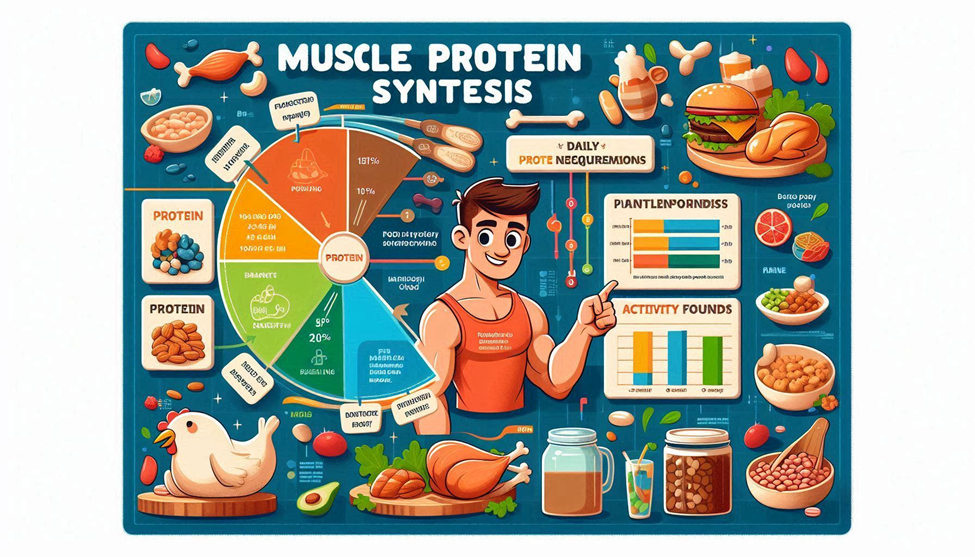
Introduction: The Protein Paradox
Protein has long held a near-mythic status in the world of nutrition. To the average person, it is the cornerstone of muscle tone and overall body composition; to the athlete, it serves as the foundational building block of strength, power, and recovery; and to the aging adult, it acts as a crucial safeguard against muscle loss, frailty, and metabolic decline. Despite its ubiquity in diets, supplements, and health discourse, one question remains deceptively complex: how much protein do we really need to optimize health, performance, and longevity?
The answer is far from one-size-fits-all. Optimal protein intake is shaped by multiple factors, including age, sex, training intensity, recovery demands, metabolic rate, and meal timing. Protein functions not merely as fuel, but as a signaling molecule that orchestrates a sophisticated internal process known as muscle protein synthesis (MPS)—the dynamic cycle of breaking down and rebuilding muscle tissue in response to mechanical stress, nutrient availability, and hormonal cues. Each amino acid consumed acts as both a building block and a messenger, instructing muscle fibers when to repair, grow, or adapt. In this sense, protein is not just a macronutrient; it is a metabolic signal that interacts with DNA, endocrine pathways, and even the body’s circadian rhythm, influencing energy allocation and recovery patterns.
Modern nutritional science has shifted far beyond the generalized RDA of 0.8 g/kg/day, which was intended to prevent deficiency rather than maximize muscle function or metabolic health. Research now emphasizes a more nuanced understanding, highlighting that the quantity and quality of protein, as well as its timing across meals, critically determine MPS outcomes. By integrating these variables, it is possible to design a diet that supports peak muscle performance, metabolic resilience, and long-term health. This article explores the intricate cellular mechanisms of MPS, examines evidence-based protein requirements across life stages and activity levels, and offers practical strategies for translating science into daily nutrition practices.
1. The Science of Muscle Protein Synthesis
Muscle protein synthesis (MPS) refers to the process where the body builds new muscle proteins to repair and strengthen tissue. It’s not a constant event—it’s a rhythmic cycle that competes with muscle protein breakdown (MPB). The balance between the two determines whether you gain, maintain, or lose muscle mass.
Every muscle contraction, every training session, and even fasting periods send biochemical signals that influence this balance. The star player in this process is the amino acid leonine, often referred to as the “trigger” amino acid because it activates the motor pathway—a molecular switch that initiates MPS
When dietary protein is consumed, amino acids enter the bloodstream and act as both building blocks and messengers. If the leonine threshold (about 2–3 grams per meal) is met, MPS is activated. But this spike is temporary; it typically lasts about 3 hours, after which MPS returns to baseline even if amino acids remain elevated—a phenomenon known as the “muscle full effect”
Thus, the key is not only how much protein you eat but how you space it throughout the day.
2. The Lucien Threshold and the Anabolic Signal
Lucien’s role cannot be overstated. Among all amino acids, it is the most potent stimulator of MPS, serving as the ignition key that tells the muscle cell, “Start building.” According to Dr. Layman (2018), leonine activates the mTORC1 complex, which then phosphorylates downstream targets like p70S6 kinas, triggering translation initiation and muscle growth.
To reach this leonine threshold, most adults require 20–35 grams of high-quality protein per meal—or approximately 0.25–0.4 g/kg of body weight. Foods rich in leonine include whey, eggs, lean meats, soy isolates, and dairy proteins.
Athletes and active individuals, due to increased protein turnover, benefit from slightly higher intakes within this range, ensuring each meal optimally stimulates MPS multiple times per day
3. Quality over Quantity: Protein Sources Matter
Not all proteins are metabolically equal. The concept of protein quality—defined by digestibility and amino acid composition—has evolved with the Digestible Indispensable Amino Acid Score (DIAAS), which more accurately measures how well a protein supports human requirements (FAO, 2013).
- Animal-based proteins (e.g., whey, eggs, chicken, and fish) typically score higher due to complete amino acid profiles and rapid digestibility.
- Plant-based proteins, while sustainable, often have lower leonine content and limiting amino acids like lysine or methionine. Combining sources (e.g., rice and beans or pea and quinoa) can create a complementary amino acid profile.
Interestingly, new research shows that fermented plant proteins and microalgae-based blends may soon close the anabolic gap between plant and animal sources the future of protein science lies in precision blending—formulations that meet amino acid ratios optimal for MPS while aligning with planetary sustainability.
4. How Much Protein Do You Really Need?
Traditional guidelines set the Recommended Dietary Allowance (RDA) for protein at 0.8 g/kg/day, primarily to prevent deficiency—not to maximize muscle health. For most adults, this is insufficient for optimal body composition or metabolic function.
Modern consensus suggests higher intakes:
- Active adults / resistance-trained individuals: 1.6–2.2 g/kg/day
- Endurance athletes: 1.4–1.8 g/kg/day
- Older adults (to counter anabolic resistance): 1.2–1.6 g/kg/day
- Weight loss phases or caloric restriction: up to 2.4 g/kg/day for muscle preservation
Studies such) have confirmed that 1.6 g/kg/day effectively maximize MPS in most individuals, with diminishing returns beyond 2.2 g/kg.
The nuance lies in context—more isn’t always better. Excessive protein without adequate energy or resistance training may not translate to added muscle gain. Protein works synergistically with training stimuli, sleep, and total energy intake.
5. Age, Anabolic Resistance, and Longevity
As we age, the body becomes less sensitive to the anabolic signals of amino acids—a phenomenon known as anabolic resistance. This means older adults require more protein per meal to achieve the same MPS response as younger individuals.
Research by Bard et al. (2013) and Moore (2015) shows that aging muscle needs around 30–40 grams of protein per meal (or 0.4–0.5 g/kg) to overcome this resistance. Lucien-enriched foods like whey, fish, and eggs are particularly effective.
Interestingly, maintaining muscle mass through adequate protein and resistance training is one of the strongest predictors of healthy aging, insulin sensitivity, and reduced mortality. Longevity, it seems, is not just about lifespan—but muscle span.
6. Nutrient Timing and Distribution
It’s not just how much you eat, but when. Spreading protein intake evenly—roughly every 3–4 hours—ensures repeated stimulation of MPS throughout the day. This pattern outperforms skewed intakes (e.g., light breakfast, heavy dinner) in both muscle retention and metabolic regulation (Arête et al., 2013).
Optimal distribution:
- Breakfast: 25–30 g (e.g., Greek yogurt with oats and nuts)
- Lunch: 30 g (e.g., quinoa bowl with chicken or tofu)
- Dinner: 30–40 g (e.g., salmon, lentils, or eggs)
- Pre-sleep snack: 20–30 g casein protein or cottage cheese supports overnight repair
This rhythm sustains a positive net protein balance, particularly critical for athletes and those in caloric deficit.
7. Training, Recovery, and the Protein Window
The long-standing “anabolic window” myth—that you must consume protein immediately post-workout—has been refined. MPS remains elevated for up to 24–48 hours post-exercise, with the most responsive period within the first 3–6 hours
Thus, while post-workout nutrition is valuable, total daily protein and distribution matter more. A mixed meal containing crabs + protein enhances glycogen replenishment and hormonal recovery (e.g., 3:1 crab-to-protein ratio).
Practical tip:
- Pre-workout: 20–30 g complete protein 1–2 hours before training
- Post-workout: 20–40 g protein within 2 hours, ideally including leonine-rich sources
8. Plant-Based Athletes and Protein Challenges
Plant-based diets are compatible with muscle growth when intelligently designed. However, achieving optimal MPS requires strategic blending and slightly higher total intakes—around 1.8–2.4 g/kg/day—to offset lower digestibility
Combining sources like soy, pea, rice, lentils, and quinoa, alongside fortified products and timing precision, ensures adequate amino acid availability. Supplementation with leonine or EAA blends can further enhance outcomes for vegan athletes.
9. beyond Muscles: Protein and Metabolic Health
Muscle tissue acts as a metabolic organ, influencing glucose regulation, immune resilience, and fat oxidation. A higher protein diet has been associated with:
- Improved satiety and weight management
- Enhanced blood glucose control in insulin-resistant individuals
- Better bone density and functional strength in aging adults
Moreover, amino acids like argentine and glutamine support immune function and gut integrity—critical under stress or training overload.
10. Risks, Myths, and Misconceptions
A common concern is that high protein harms kidneys or bones. However, evidence indicates no adverse effects in healthy individuals consuming up to 2.2–3.0 g/kg/day (Portman’s & Dellalieux, 2000).
For those with pre-existing kidney disease, moderation and medical supervision are warranted.
Another myth: “Extra protein turns into fat.” In reality, protein has a high thermal effect (20–30%), meaning a significant portion of its calories are burned during digestion. Excessive intake beyond energy needs may still lead to fat gain, but less efficiently than carbohydrates or fats.
11. Personalized Protein: The Future of Nutrition
Emerging fields like nutrigenomics and metabolomics are revealing how genetic variations influence protein metabolism. Polymorphisms in genes related to motor, FTO, or amino acid transporters may partly explain why two people respond differently to the same protein intake
Future dietary models will integrate biomarker feedback, wearable data, and AI-driven nutrition mapping to tailor protein needs dynamically—by activity, stress, and recovery state.
Conclusion
Protein is more than fuel—it’s a form of biological communication. Every serving of protein you consume sends biochemical instructions that influence how your body rebuilds, adapts, and evolves. Within each amino acid lies information that speaks directly to your muscles, hormones, and even your genes. This molecular dialogue determines whether your body enters a state of growth, repair, or stagnation. When consumed strategically—at the right time, in the right amount, and from the right sources—protein becomes the architect of metabolic intelligence rather than a mere calorie source.
Achieving optimal muscle protein synthesis (MPS) is therefore not about eating endlessly or obsessing over numbers—it’s about aligning nutrition with physiology. The ideal intake for most adults falls between 1.6–2.2 g/kg of body weight per day, distributed evenly across three to four meals. Each meal should contain around 20–40 grams of complete, leonine-rich protein, whether from animal or carefully balanced plant-based sources. This approach ensures repeated stimulation of the motor pathway throughout the day, sustaining an anabolic environment for muscle repair, recovery, and resilience.
Ultimately, the goal is not just to build muscle mass, but to cultivate metabolic intelligence—a state where energy is used efficiently, recovery is optimized, and longevity is supported. When protein is understood as a signal rather than a statistic, nutrition becomes a tool for cellular precision. You are not merely feeding your muscles—you are teaching your cells how to thrive, regenerate, and perform at their biological best.
SOURCES
Atherton & Smith, 2012 – The role of motor in muscle protein synthesis and human metabolism.
Moore et al., 2009 – The muscle full effect: time-course of protein synthesis after feeding.
Phillips et al., 2016 – Protein recommendations for athletes and active individuals.
Morton et al., 2018 – A systematic review on protein intake and muscle hypertrophy.
Arête et al., 2013 – Timing and distribution of protein intake for optimal synthesis.
Bard et al., 2013 – Age-related anabolic resistance and strategies to overcome it.
Duets et al., 2014 – Protein intake and healthy aging: maintaining muscle mass.
Schoenfeld & Aragon, 2018 – Nutrient timing revisited: the post-exercise window reconsidered.
Van Viet et al., 2015 – Plant-based protein and muscle adaptation.
Pardon-Jones & Leidy, 2014 – Protein intake for satiety and metabolic health.
Portman’s & Dellalieux, 2000 – Protein intake and kidney function in healthy adults.
Layman, 2018 – Lucien and metabolic signaling in human nutrition.
FAO, 2013 – DIAAS scoring and global protein quality assessment.
Churchward-Venne et al., 2019 – Fermented and novel plant proteins for muscle growth.
Smith et al., 2020 – Genomic determinants of protein metabolism and performance.
HISTORY
Current Version
Nov 05, 2025
Written By
ASIFA