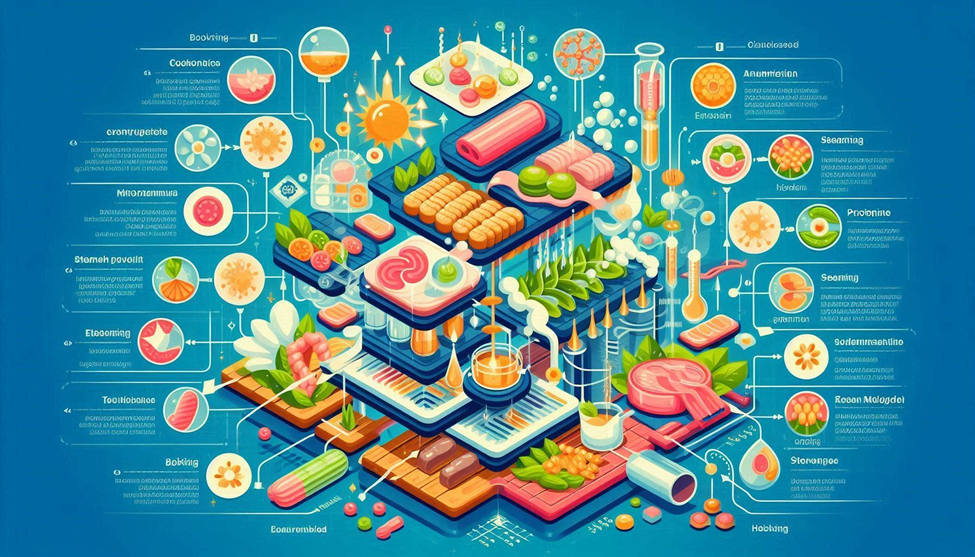
Introduction: The Molecular Dance of Proteins
Proteins are the workhorses of life, performing structural, enzymatic, and signaling functions critical to every cell and organ system. Composed of long chains of amino acids, proteins achieve their functional capacity only after adopting specific three-dimensional conformations—a process known as protein folding. Folding is highly sensitive to environmental conditions, particularly temperature, pH, ionic strength, and the presence of molecular chaperones. Even subtle alterations in folding can dramatically affect biological activity, digestibility, and bioavailability.
Cooking introduces heat as a central variable in protein chemistry. Heat disrupts weak intermolecular interactions—hydrogen bonds, van deer Waals forces, and hydrophobic interactions—leading to denaturation, which unfolds the protein and alters its tertiary and quaternary structure. While denaturation can improve digestibility and nutrient availability, excessive heat or prolonged cooking may trigger aggregation, Mallard reactions, and amino acid oxidation, which can reduce nutritional value or generate bioactive compounds with unintended metabolic effects.
This guide explores how cooking methods rewrite the nutritional landscape of proteins, emphasizing the molecular transformations, enzymatic implications, and health consequences. By understanding these processes, we can make informed culinary choices that maximize nutrient bioavailability, support metabolic health, and mitigate the formation of potentially harmful compounds.
1. Protein Structure and Folding Fundamentals
1.1 Primary, Secondary, Tertiary, and Quaternary Structures
Proteins possess hierarchical structures:
- Primary structure: Linear amino acid sequence dictated by genetic code.
- Secondary structure: Local folding patterns stabilized by hydrogen bonds, including α-helices and β-sheets.
- Tertiary structure: Three-dimensional conformation driven by hydrophobic interactions, disulfide bonds, and ionic interactions.
- Quaternary structure: Assembly of multiple polypeptide subunits forming functional protein complexes (e.g., hemoglobin).
The functional specificity of proteins depends on correct folding at each structural level. Misfiling can compromise enzymatic activity, hormone function, or structural integrity, sometimes leading to disease states such as amyloidoses or metabolic deregulation.
1.2 The Role of Molecular Chaperones
In vivo, molecular chaperones assist protein folding by preventing aggregation, promoting correct conformations, and refolding damaged proteins. Cooking, however, bypasses cellular chaperone systems, exposing proteins directly to thermal stress and chemical modification. Understanding the molecular principles of folding provides a framework for evaluating how heat transforms food proteins at a biochemical level.
2. Heat-Induced Denaturation: Unfolding Proteins for Nutrition
2.1 Thermal Denaturation Mechanics
Heating disrupts non-covalent bonds, causing proteins to lose their native conformation. Denatured proteins exhibit:
- Loss of tertiary and quaternary structure
- Exposure of hydrophobic residues
- Increased susceptibility to enzymatic cleavage
For example, egg whites contain ovalbumin, which unfolds and coagulates upon heating at ~60–70°C, enhancing digestibility while maintaining safety from pathogens. Similarly, muscle proteins in meat denature at 40–70°C, altering texture and enzymatic accessibility.
2.2 Impact on Digestibility
Denaturation generally increases protein digestibility by exposing peptide bonds to proteolysis enzymes like pepsin and try sin. Heat-treated proteins are more efficiently hydrolyzed in the gastrointestinal tract, enhancing amino acid absorption. However, extreme temperatures or prolonged cooking can lead to cross-linking and aggregation, reducing enzymatic accessibility and decreasing net protein utilization.
2.3 Mallard Reactions and Advanced Gyration End Products (AGEs)
Heat can induce Mallard reactions, where amino groups of lysine or argentine react with reducing sugars. While Mallard products contribute to flavor and color, some AGEs are biologically active and may promote oxidative stress, inflammation, and insulin resistance when consumed in excess. Cooking methods like grilling, frying, or broiling accelerate these reactions compared to boiling or steaming.
3. Cooking Methods and Protein Transformation
Different culinary techniques exert distinct effects on protein structure, bioavailability, and health outcomes.
3.1 Boiling and Steaming
- Moderate heat preserves amino acid integrity and prevents excessive Mallard reactions.
- Proteins unfold without significant cross-linking, improving digestibility.
- Retention of water-soluble proteins and peptides supports nutrient preservation.
Example: Steamed fish maintains high-quality protein while preserving bioactive peptides like turbine and carnosine.
3.2 Roasting and Baking
- High, dry heat promotes protein coagulation, browning, and flavor development.
- Risk of Mallard products and lysine modification increases.
- Structural hardening can reduce enzymatic accessibility if overcooked.
Example: Baked chicken develops flavor through Mallard browning but may lose some digestible lysine if overexposed to heat.
3.3 Frying and Searing
- High-temperature cooking (160–200°C) rapidly denatures proteins.
- Generates crust and enhanced flavor but increases AGEs and oxidized amino acids.
- Lipid oxidation products may interact with proteins, forming advanced lipid-protein oxidation products (ALEs).
3.4 Pressure Cooking and Soups Vide
- Pressure cooking allows high-temperature, high-pressure environments, accelerating denaturation while retaining water-soluble nutrients.
- Soups vide cooking at controlled low temperatures (55–65°C) optimizes protein tenderness and minimizes nutrient loss and AGE formation.
4. Protein Quality and Amino Acid Retention
4.1 Heat-Sensitive Amino Acids
Some amino acids, particularly lysine, cytokine, and tryptophan, are sensitive to thermal degradation. Loss or modification reduces biological value and limits the efficiency of protein utilization. Lysine, for example, reacts readily in Mallard reactions, decreasing its bioavailability.
4.2 Protein Digestibility-Corrected Amino Acid Score (PDCAAS)
Cooking methods affect PDCAAS by altering amino acid composition and digestibility. Moderate heat generally enhances digestibility and PDCAAS, whereas excessive heat, prolonged cooking, or dry high-temperature methods may lower it.
4.3 Bioactive Peptides and Functional Properties
Denaturation and proteolysis can release bioactive peptides with antioxidant, antihypertensive, or immunomodulatory effects. Cooking methods that preserve these peptides—such as gentle steaming or soups vide—maximize functional benefits.
5. Protein-Lipid and Protein-Carbohydrate Interactions
Heat also modulates interactions between proteins, lipids, and carbohydrates in food matrices.
5.1 Protein-Lipid Complexes
- Frying or roasting in the presence of lipids can create protein-lipid complexes, altering digestibility and forming oxidized lipid-protein adducts.
- These compounds may impact inflammation and metabolic responses.
5.2 Protein-Carbohydrate Reactions
- Mallard reactions between proteins and sugars generate complex flavors and colors.
- Excessive browning reduces lysine bioavailability and may produce AGEs implicated in oxidative stress.
Understanding these interactions informs cooking choices that balance flavor, texture, and nutrition.
6. Protein Folding, Heat, and Micro biome Interactions
Denatured proteins exert a significant influence on gut micro biota composition and metabolic activity, shaping digestive efficiency, microbial diversity, and the production of bioactive metabolites. When proteins are heat-altered, their tertiary and quaternary structures unfold, exposing peptide bonds that become more accessible to digestive enzymes in the stomach and small intestine. This enhanced digestibility generally allows the majority of amino acids to be absorbed efficiently, leaving fewer undigested proteins to reach the colon. As a result, the substrate available for microbial fermentation is reduced, which can favor a more balanced gut microbial ecosystem and limit the proliferation of proteolysis bacteria that produce potentially harmful metabolites.
Conversely, proteins that are excessively denatured, cross-linked, or aggregated—often due to high-temperature or prolonged cooking methods—may resist enzymatic hydrolysis and partially escape digestion. These undigested proteins arriving in the colon undergo proteolysis fermentation, producing metabolites such as ammonia, phenols, insoles, hydrogen sulfide, and branched-chain fatty acids. While some of these compounds serve signaling or energy functions, in excess they can contribute to mucosal irritation, symbiosis, systemic inflammation, and metabolic disturbances.
The choice of cooking method therefore plays a critical role in modulating protein-micro biome interactions. Gentle cooking methods, such as steaming, boiling, or soups vide, optimize protein digestibility while minimizing the formation of indigestible aggregates, reducing the generation of potentially harmful fermentation byproducts. In this way, culinary strategies that consider protein structure and thermal processing can indirectly influence gut microbial composition, promote colon health, and support systemic metabolic homeostasis, highlighting the intricate interplay between diet, digestion, and the micro biome.
7. Practical Applications and Dietary Implications
7.1 Optimizing Cooking Methods
- Prefer steaming, boiling, or soups vide to retain amino acids and bioactive peptides.
- Avoid prolonged high-heat dry cooking to reduce Mallard product formation.
- Incorporate diverse cooking methods to balance flavor, digestibility, and nutrient retention.
7.2 Combining Proteins and Other Nutrients
- Pair heat-stable proteins with antioxidants (e.g., vitamin C-rich vegetables) to mitigate oxidative products.
- Combine plant and animal proteins for complete amino acid profiles.
- Use culinary strategies that preserve water-soluble proteins, peptides, and micronutrients.
8. Protein Cooking in Clinical Nutrition
Protein preparation plays a pivotal role in clinical and applied nutrition, as cooking methods directly influence digestibility, amino acid bioavailability, and the retention of bioactive compounds. Elderly or malnourished patients, who often exhibit reduced digestive enzyme activity, slower gastrointestinal transit, and diminished nutrient absorption, particularly benefit from gently cooked proteins. Methods such as steaming, poaching, or light boiling unfold protein structures without excessive aggregation, allowing digestive enzymes to access peptide bonds more effectively. This enhances amino acid availability, supports muscle protein synthesis, and helps prevent sarcopenia, frailty, and protein-energy malnutrition.
In the context of sports nutrition, protein quality and functional activity are critical for recovery, muscle repair, and performance optimization. Soups vide cooking or lightly steaming proteins preserves the integrity of bioactive peptides, such as carnosine, turbine, and glutamine, which exhibit antioxidant, anti-inflammatory, and muscle-repairing properties. Athletes consuming proteins prepared in this manner may experience improved post-exercise recovery, reduced oxidative stress, and enhanced anabolic signaling.
For individuals with metabolic disorders such as diabetes, obesity, or chronic kidney disease, cooking methods that minimize the formation of advanced gyration end products (AGEs) are recommended. Boiling, steaming, or soups vide cooking reduces Mallard reaction products that can exacerbate oxidative stress, inflammation, and insulin resistance, supporting metabolic homeostasis. Overall, tailoring protein cooking methods to the specific needs of patient populations or performance goals allows for precision nutrition, optimizing health outcomes while preserving the functional and nutritional quality of proteins.
9. Emerging Research and Future Directions
Current studies explore:
- Controlled thermal processing to enhance bioactive peptide release.
- Minimizing AGEs while optimizing taste and texture.
- Niño-thermodynamics of protein folding under different cooking pressures.
- Personalized culinary strategies based on gut micro biome and genetic polymorphisms affecting protein digestion.
Conclusion
Heat profoundly transforms proteins, reshaping their structure, digestibility, bioactivity, and interactions with other macronutrients. Cooking induces denaturation, exposing peptide bonds to enzymatic hydrolysis and generally improving digestibility. However, excessive heat or prolonged high-temperature methods can lead to aggregation, cross-linking, and Mallard reactions, reducing the bioavailability of essential amino acids like lysine and cytokine, and generating compounds such as AGEs with potential metabolic and inflammatory consequences.
The choice of cooking method dictates nutritional outcomes: gentle steaming, boiling, or soups vide preserve amino acid integrity, water-soluble peptides, and functional properties, whereas frying, roasting, or grilling at high temperatures enhances flavor and texture but may compromise nutrient quality. Additionally, heat-induced protein transformations influence guts micro biome activity, modulating proteolysis fermentation and systemic metabolic effects.
By understanding the molecular and enzymatic principles of protein folding and heat-induced modification, chefs, nutritionists, and clinicians can make informed decisions to maximize nutrient availability, optimize health outcomes, and maintain culinary appeal. Cooking becomes not only an art but also a science, where temperature, time, and technique are leveraged to balance taste, texture, and the biological potency of protein-rich foods, ultimately redefining the nutritional landscape through informed culinary practices.
SOURCES
Boy, 2012. Heat-Induced Protein Denaturation and Nutritional Quality.
Damodaran, 2008. Proteins: Structure and Functional Properties.
Friedman, 1996. Chemistry, Biochemistry, and Safety of the Mallard Reaction.
Morrison, 2011. Protein Denaturation and Digestibility in Food Processing.
Maugham, 2007. Thermal Effects on Amino Acid Bioavailability.
Nielsen, 2003. Protein Quality and Digestibility in Heated Foods.
Zhang, 2014. Cooking Methods and Protein Nutritional Value.
Wolfe, 2017. Protein Structure, Folding, and Human Nutrition.
Herman son, 2008. Heat-Induced Protein Aggregation in Food Systems.
Finkelstein, 2002. Thermal Denaturation Kinetics of Proteins.
Kinchella, 1979. Functional Properties of Food Proteins.
Hag, 2007. Mallard Reaction Products in Foods and Human Health.
Pavlov, 2015. Protein-Lipid Interactions during Heat Processing.
Li-Chan, 2004. Bioactive Peptides Released by Heat Treatment.
Sforza, 2012. Protein Digestibility and Heat-Induced Modifications.
Xing, 2000. Denaturation, Aggregation, and Food Protein Functionality.
Acheson, 2013. Protein Structural Changes and Digestive Enzyme Activity.
Minibus, 2014. Protein Behavior in the Gastrointestinal Tract.
Urbonaviciene, 2010. Advanced Gyration End Products from Cooking.
Watanabe, 2011. Thermal Processing Effects on Amino Acid Integrity.
Jiang, 2017. Soups Vide Cooking and Protein Retention.
Fischer, 2008. Interactions between Proteins and Micro biota in the Colon.
Lund, 2007. Protein Denaturation, Heat Treatment, and Functional Food Design.
Damodaran & Parking, 2017. Food Proteins: Molecular Structure and Properties.
HISTORY
Current Version
Nov 13, 2025
Written By
ASIFA