1. Introduction
In nutrition, few macronutrients are as debated and misunderstood as protein. For decades, the discourse revolved around how much protein one should consume daily — grams per kilogram, percentages of total calories, or meal-based targets. Yet, emerging nutritional science has revealed that quality may be more determinant of long-term health, muscle retention, and metabolic efficiency than mere volume.
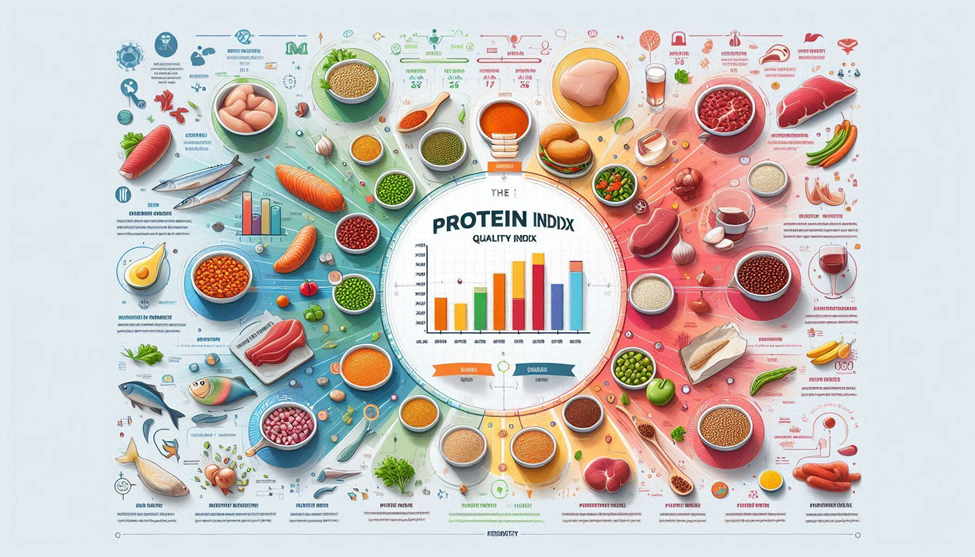
Protein is not a monolithic nutrient but a complex mosaic of amino acids — each with distinct roles in muscle synthesis, neurotransmitter production, enzyme activation, and cellular repair. The difference between animal and plant-based proteins lies not only in amino acid composition but in digestibility, bioavailability, and co-nutrient synergy. Understanding these nuances gives rise to the concept of the Protein Quality Index (PQI) — a framework that moves beyond grams to assess biological impact.
In the age of plant-forward and sustainable eating, evaluating protein quality has become an essential step toward balanced nutrition that honors both physiology and the planet. The Protein Quality Index thus serves as a compass, guiding consumers, athletes, and clinicians toward more intelligent protein sourcing strategies.
2. The Science of Protein Quality
Protein quality reflects how efficiently the body can use dietary protein for tissue growth and repair. It depends on three key dimensions:
- Amino Acid Profile – the proportion of essential amino acids (EAAs) required for protein synthesis.
- Digestibility – how much of the ingested protein is broken down and absorbed.
- Bioavailability – how effectively absorbed amino acids are utilized at the cellular level.
To measure these factors, scientists have developed indices such as:
- Biological Value (BV) – Measures how efficiently absorbed protein is converted into body proteins.
- Protein Digestibility-Corrected Amino Acid Score (PDCAAS) – Adjusts amino acid score based on digestibility; used by the WHO and FDA.
- Digestible Indispensable Amino Acid Score (DIAAS) – A more precise modern metric assessing amino acid digestibility at the ilea (small intestine) level.
The DIAAS system, now favored by researchers, differentiates high-quality animal proteins (like eggs, whey, and casein with DIAAS > 100) from most plant proteins (often 40–80), which are limited in one or more essential amino acids.
3. Animal Proteins: Nature’s Complete Blueprint
Animal proteins — including meat, fish, eggs, dairy, and poultry — are considered “complete” because they contain all nine essential amino acids in optimal ratios. They also exhibit superior digestibility (90–99%) and bioavailability due to their similar amino acid structure to human tissue.
3.1. Muscle and Metabolic Efficiency
Whey protein, for example, has a DIAAS of 118–140, making it one of the most effective sources for stimulating muscle protein synthesis (MPS). This is largely attributed to its leonine content, a branched-chain amino acid (BCAA) that triggers the motor pathway — the master regulator of anabolic metabolism.
Eggs, often referred to as the “gold standard” of protein, provide a BV of 100 and a complete EAA profile, while lean meats and fish contribute not only high-quality protein but vital nutrients like home iron, zinc, and vitamin B12, which enhance overall nutrient absorption and oxygen transport.
3.2. The Co-Factor Advantage
Animal proteins deliver co-nutrients that are synergistic to protein metabolism:
- Creative – Enhances muscle energy buffering.
- Caroline and Maurine – Improve muscle endurance and cellular antioxidant defense.
- Hemet Iron and Zinc – Support erythropoietin and immune integrity.
- Vitamin B12 and D – Facilitate methylation, DNA synthesis, and neuromuscular health.
These synergistic micronutrients amplify the inefficacy of animal proteins, making them not merely macronutrients but metabolic accelerators.
4. Plant Proteins: Incomplete yet Intelligent
Plant proteins — found in legumes, grains, nuts, and seeds — have become central to sustainable and ethical dietary movements. While most are incomplete proteins (lacking one or more EAAs), their metabolic and ecological benefits are undeniable.
4.1. Amino Acid Limitations
Common limitations include:
- Lysine deficiency in cereals (wheat, rice, corn)
- Methionine deficiency in legumes (beans, lentils, peas)
- Tryptophan and heroine scarcity in certain plant isolates
However, strategic protein complementation — combining legumes and grains (e.g., rice and beans, hummus and pita) — can create a complete amino acid profile when consumed across meals.
4.2. Digestibility and Anti-Nutrients
Plant proteins exhibit lower digestibility (60–90%) due to anti-nutritional factors such as:
- Phytates – Bind minerals like iron and zinc.
- Tannins and lections – Inhibit enzyme activity.
- Fiber – Slows amino acid absorption.
Modern processing techniques — fermentation, soaking, germination, and extrusion — significantly improve digestibility and amino acid bioavailability, enhancing the functional PQI of plant proteins.
4.3. Beyond Amino Acids: The Phytonutrient Dimension
Plant proteins bring a unique advantage: bioactive photochemical such as polyphones, flavonoids, and arytenoids that reduce oxidative stress and inflammation. This makes plant-based proteins metabolically beneficial, especially in anti-inflammatory diets and cardio metabolic risk reduction strategies.
5. Protein Quality Index (PQI): A Comparative Framework
The Protein Quality Index integrates amino acid score, digestibility, and micronutrient co-factors into a composite ranking system:
| Source | DIAAS | Key Limiting Amino Acid | Digestibility | PQI Tier |
| Whey Protein | 118–140 | None | 99% | Elite |
| Egg | 113 | None | 98% | Elite |
| Beef | 107 | None | 94% | High |
| Chicken | 108 | None | 93% | High |
| Soy Isolate | 84–90 | Methionine | 90% | Moderate |
| Pea Protein | 73 | Methionine | 88% | Moderate |
| Brown Rice Protein | 64 | Lysine | 85% | Basic |
| Oats | 59 | Lysine | 82% | Basic |
| Wheat Gluten | 45 | Lysine | 77% | Low |
This comparative lens underscores that while animal proteins dominate in PQI ranking, blended plant proteins can rival them when carefully formulated.
6. The New Frontier: Hybrid and Functional Proteins
The future of protein science lies in synergistic integration — merging animal precision with plant sustainability. Hybrid proteins, such as dairy-pea blends or egg-soy isolates, can achieve superior DIAAS values (95–120) while reducing environmental impact.
Advances in fermentation biotechnology now allow microbes to produce animal-identical proteins — like precision-fermented whey or casein — offering the nutritional efficacy of dairy without livestock dependence. Similarly, mycoproteins (derived from fungi) deliver high DIAAS scores (90–100) with remarkable digestibility and a sustainable carbon footprint.
7. Protein Quality and Human Health
Protein quality is a cornerstone of human physiology — shaping muscle maintenance, enzyme activity, neurotransmitter synthesis, immune function, and cellular repair. High-quality proteins provide a complete amino acid profile with superior digestibility, ensuring that every metabolic pathway has the raw materials it needs to sustain vitality and longevity. Essential amino acids like leonine, tryptophan, and methionine act not just as building blocks but as metabolic regulators, influencing satiety, hormone production, and recovery.
When protein quality is compromised — through inadequate intake or limited amino acid diversity — the body adapts by reducing lean tissue synthesis, impairing cognitive focus, and weakening immune resilience. Over time, low-quality or imbalanced protein consumption contributes to sarcopenia, fatigue, poor wound healing, and mood disturbances.
Optimizing protein quality, therefore, extends beyond quantity. It requires selecting diverse, nutrient-dense sources — from eggs, fish, and dairy to fortified plant blends and fermented legumes — and aligning intake with metabolic demands, activity level, and age. In this sense, protein becomes not merely a macronutrient but a metabolic instrument of health — fine-tuned to support endurance, repair, and the intelligent adaptability that defines true wellness.
7.1. Muscle Health and Aging
Adequate intake of high-quality protein is crucial for preventing sarcopenia (age-related muscle loss). Older adults require more leonine-rich sources to counter anabolic resistance — typically 30–40 g per meal from whey, eggs, or fortified plant blends.
7.2. Metabolic Function
High-quality protein supports:
- Gluconeogenic balance (stable blood sugar)
- Thermo genesis and satiety (weight management)
- Hormone synthesis (thyroid, insulin, and growth factors)
- Mitochondrial repair (cellular energy resilience)
7.3. Gut and Immune Health
While animal proteins enhance tissue regeneration, plant proteins contribute periodic fibers and polyphones, fostering a diverse micro biome — the cornerstone of immune and metabolic health.
8. Sustainability and Ethical Dimensions
While animal proteins lead nutritionally — offering superior amino acid completeness, digestibility, and bioavailability — their environmental footprint carries significant trade-offs. The production of meat, dairy, and eggs demands vast natural resources, contributing disproportionately to greenhouse gas emissions, freshwater depletion, and deforestation. Livestock systems, though efficient in nutrient conversion, often strain ecosystems and accelerate climate imbalance through methane release and intensive land occupation. Thus, the nutritional supremacy of animal protein comes entwined with an ecological cost that humanity can no longer ignore.
In contrast, plant proteins — derived from legumes, grains, nuts, and seeds — represent the ecological conscience of modern nutrition. They require fewer natural inputs, emit less carbon, and contribute to soil regeneration through nitrogen fixation and biodiversity. Yet, their Protein Quality Index (PQI) tends to be lower due to limited levels of essential amino acids like lysine, methionine, or leonine and slightly reduced digestibility. However, scientific innovation and culinary intelligence are rapidly bridging this gap through fortification, fermentation, and blending technologies that elevate plant proteins to near-parity with animal sources.
The true path forward lies in nutritional ecology — a model that harmonizes human health with environmental stewardship. This paradigm encourages protein diversification, blending strategic portions of high-quality animal proteins (such as eggs, fish, or fermented dairy) with complementary plant proteins (like quinoa, soy, lentils, or chickpeas). Such synergy delivers not only complete amino acid profiles but also micronutrients, fiber, and bioactive that foster gut and immune health.
By adopting a protein diversification model, societies can achieve metabolic sufficiency without ecological excess. This approach transforms protein from a binary debate into a continuum of choices — where nutrition meets ethics and sustainability becomes the ultimate measure of quality. In this balanced vision, protein nourishes not just the individual body, but the living planet it depends upon.
9. Practical Guidelines: Building a Protein-Intelligent Plate
To maximize PQI in everyday eating:
- Mix sources: Combine legumes and grains or blend whey with pea protein.
- Time intake: Distribute protein evenly across meals (≈0.3 g/kg/meal).
- Leverage leonine: Include leonine-rich foods (eggs, soy, lentils) to stimulate MPS.
- Mind bioavailability: Choose fermented or sprouted plant proteins.
- Balance sustainability: Opt for responsibly sourced animal products or hybrid innovations.
Conclusion
Protein quality is the metabolic language of resilience — the silent grammar through which the body communicates vitality, adaptation, and longevity. Every amino acid becomes a word in this biological dialogue, shaping muscle architecture, cognitive clarity, hormonal rhythm, and immune precision. To understand protein quality is to understand how deeply nutrition orchestrates not just strength, but coherence — the synchronized functionality of every physiological system.
When the diet provides proteins of high biological value, the body operates in anabolic fluency: repairing tissues efficiently, maintaining neurotransmitter balance, and sustaining metabolic agility under stress. Yet resilience is not built solely on quantity; it thrives on precision — the right amino acid ratios, the right timing, the right metabolic context. This is where the concept of the Protein Quality Index (PQI) transcends traditional nutrition metrics. It recognizes that proteins are not isolated macronutrients but biointelligent molecules, each carrying specific informational potential that instructs cellular behavior.
In the evolving era of precision nutrition, PQI offers a compass for both health optimization and planetary stewardship. It allows us to bridge evolutionary biology with ethical modernity — aligning what nourishes the body with what sustains the Earth. Animal proteins deliver unparalleled amino acid completeness and bioavailability, while plant proteins contribute phytonutrients, fiber, and ecological stability. The future is not about conflict between these sources but metabolic harmony — designing diets that integrate both for human and environmental resilience.
Ultimately, protein is no longer a mere calorie source; it is a nutrient of purpose — one that supports physical performance, emotional equilibrium, and ecological intelligence. The Protein Quality Index invites us to move beyond numbers toward meaning — where every bite becomes a contribution not only to muscle, but to the ongoing evolution of life’s coherence, strength, and sustainability.
SOURCES
Phillips, 2016 – The science of muscle protein synthesis and dietary protein quality.
FAO, 2013 – Report on dietary protein evaluation and the DIAAS model.
Schaafsma, 2012 – Comparison of PDCAAS and DIAAS methodologies.
Wu, 2021 – Amino acid metabolism and human protein nutrition.
Tipton & Wolfe, 2004 – Role of leonine in muscle anabolism.
Maugham, 2020 – Human amino acid requirements and digestibility assessment.
Harris, 2012 – Creative and carnosine in muscle energetic.
Allen, 2008 – Vitamin B12 physiology and human nutrition.
Marietta & Gardner, 2019 – Plant protein and amino acid adequacy.
FAO, 2011 – Food composition and amino acid scoring.
Giyani et al., 2012 – Anti-nutritional factors in plant protein digestion.
Rebelled et al., 2020 – Processing techniques to enhance plant protein digestibility.
Messina, 2016 – Health effects of soy protein and is flavones.
Van Viet et al., 2015 – Muscle synthesis response to plant vs. animal proteins.
Rutherford et al., 2015 – DIAAS values of hybrid protein blends.
Bryant, 2022 – Precision fermentation and sustainable protein innovation.
Derbyshire, 2020 – Mycoprotein as a sustainable protein source.
Valhi et al., 2013 – Protein needs in aging populations.
Pardon-Jones, 2017 – Protein distribution and metabolic health.
Firestorm, 2013 – Amino acids and neurotransmitter synthesis.
Wu et al., 2019 – Gut micro biota and protein metabolism.
Pore & Nemeses, 2018 – Environmental impact of global food systems.
Willett et al., 2019 – The EAT-Lancet Commission on sustainable diets.
HISTORY
Current Version
Nov 05, 2025
Written By
ASIFA