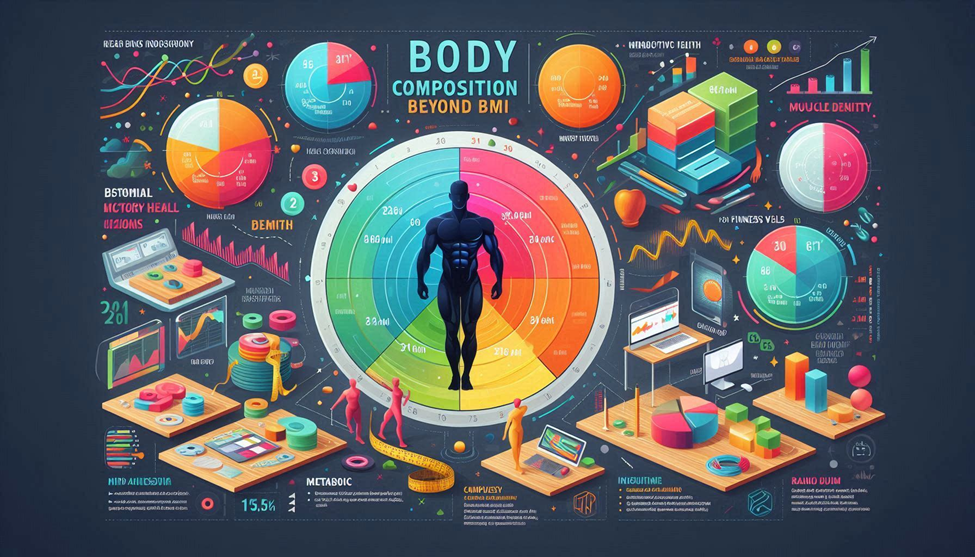
1. Rethinking the Numbers: Why BMI Falls Short
For decades, Body Mass Index (BMI) has been the gold standard in public health and clinical practice for categorizing individuals as underweight, normal, overweight, or obese. Its formula—weight in kilograms divided by height in meters squared—seems elegantly simple. However, simplicity often hides critical biological nuance.
BMI was never designed to measure body composition. Developed by Belgian mathematician Adolph Quenelle in the 1830s, the “Quenelle Index” aimed to describe population averages, not individual metabolic health. It assumes that weight scales linearly with height, overlooking distinctions between fat mass, lean mass, bone density, and visceral fat distribution.
In modern metabolic science, two individuals with the same BMI can have profoundly different health profiles. A 75 kg athlete with high muscle density and a 75 kg sedentary individual with low muscle mass and high visceral fat may share a BMI, but not the same insulin sensitivity, inflammatory status, or longevity potential.
Emerging data reveals that normal-weight obesity—a condition where BMI is within the “healthy” range but body fat percentage is excessive—is a silent epidemic. Studies show that individuals with normal BMI but high visceral adiposity exhibit higher risks of cardio metabolic syndrome, fatty liver, and insulin resistance than those with higher BMI but greater muscle-to-fat.
The truth is clear: BMI is a starting point, not a verdict. Understanding true metabolic health requires exploring deeper markers—muscle density, fat distribution, cellular hydration, and metabolic flexibility.
2. Decoding Body Composition: The New Biomarkers of Health
Body composition analysis divides the body into compartments:
- Fat mass (FM) – includes both subcutaneous and visceral fat.
- Fat-free mass (FFM) – includes muscles, bones, organs, and water.
- Skeletal muscle mass (SMM) – a critical determinant of metabolic rate and glucose regulation.
- Body water and intracellular hydration – reflecting cellular vitality and metabolic activity.
Unlike BMI, these parameters describe what the body is made of, not just how much it weighs.
2.1 Muscle Density: The Metabolic Engine
Muscle density refers to the quality and compactness of skeletal muscle tissue. Denser muscles contain more contractile proteins, mitochondria, and capillary networks per unit volume—markers of metabolic efficiency.
High muscle density means more mitochondrial activity, enhanced glucose uptake via GLUT4 transporters, and improved fat oxidation. It also correlates with higher resting metabolic rate (RMR) and greater hormonal sensitivity—especially to insulin, testosterone, and growth hormone.
Aging, sedentary lifestyle, and inflammation can decrease muscle density through myosteatosis—the infiltration of fat within muscle fibers. This intramuscular fat disrupts insulin signaling, reduces strength, and slows metabolic rate. In fact, research shows that muscle density predicts insulin sensitivity more accurately than total muscle mass (Good aster et al., 2000).
3. The Science of Metabolic Health: Muscle as an Endocrine Organ
The idea that muscle tissue is merely for locomotion is outdated. Modern physiology recognizes skeletal muscle as a dynamic endocrine organ, secreting bioactive peptides known as cytokines that communicate with adipose tissue, liver, and the brain.
3.1 Moines and Metabolic Signaling
When muscles contract during exercise, they release cytokines such as iris in, IL-6, misstating, and brain-derived neurotrophic factor (BDNF).
- Iris in promotes the browning of white fat, increasing thermo genesis and energy expenditure.
- IL-6, in acute bursts, improves glucose uptake and biolysis.
- BDNF supports neuroplasticity and cognitive function, linking muscle activity to brain health.
- Misstating, conversely, inhibits muscle growth—over expression contributes to sarcopenia and metabolic slowdown.
These molecular signals reveal a fundamental truth: metabolic health depends on muscle function as much as on fat storage.
3.2 Insulin Sensitivity and Glucose Disposal
Skeletal muscle accounts for approximately 75% of insulin-stimulated glucose uptake in healthy individuals. The more metabolically active the muscle, the more efficiently it clears glucose from the bloodstream.
Reduced muscle density, even without weight gain, leads to glucose intolerance and hyperinsulinemia. Thus, an individual with “normal BMI” but reduced lean mass may still develop Type 2 diabetes or metabolic syndrome.
4. Fat Distribution: Visceral vs. Subcutaneous
Not all fat is metabolically equal. The location of fat storage dictates its hormonal activity and disease risk.
- Subcutaneous fat, stored under the skin, is relatively inert and even protective in moderation.
- Visceral fat, located around organs, acts as an endocrine disruptor, secreting pro-inflammatory cytokines such as TNF-α and IL-1β.
Visceral adiposity contributes to chronic low-grade inflammation, oxidative stress, and hepatic lipid accumulation. In contrast, individuals with high subcutaneous but low visceral fat—despite elevated BMI—often demonstrate better metabolic resiblience.
Advanced imaging like DEXA (Dual-Energy X-ray Absorptiometry) or MRI quantifies visceral vs. subcutaneous fat, offering a far more predictive measure of metabolic health than BMI alone.
5. Muscle Density, Aging, and Longevity
5.1 Sarcopenia and Myosteatosis
After the age of 30, adults lose roughly 3–8% of muscle mass per decade, accelerating after age 50. But muscle quality—its density and fiber integrity—declines even faster due to myosteatosis and fibrosis.
This process, known as sarcopenic obesity when accompanied by fat gain, leads to functional decline, frailty, and reduced metabolic rate. Individuals with sarcopenia exhibit higher mortality risk independent of BMI.
5.2 Mitochondrial Decline and Metabolic Inflexibility
Mitochondria within muscle fibers determine energy efficiency. Aging muscles accumulate dysfunctional mitochondria, reducing oxidative capacity and promoting lipid spillover into tissues—a precursor to insulin resistance.
Resistance training and high-intensity exercise have been shown to rejuvenate mitochondrial function and improve muscle density even in adults over 70 .
6. Muscle Density and Inflammation: The Crosstalk of Cytokines
Metabolic inflammation (“metaflammation”) arises when excess fat and low muscle density amplify systemic cytokine release.
Low muscle mass correlates with higher circulating C-reactive protein (CRP), TNF-α, and IL-6—markers of inflammatory aging. In contrast, muscle-derived anti-inflammatory cytokines (such as IL-10 and IL-1ra) counteract this response.
Muscle density, therefore, not only determines strength but also acts as a buffer against inflammation, influencing immune aging (inflammation) and chronic disease risk.
7. Nutrition and Muscle Density: Beyond Protein Quantity
Protein intake is vital but muscle quality depends on more than amino acids. Micronutrients, antioxidant load, and hormonal milieu all play key roles in my fiber repair and metabolic integrity.
7.1 Optimal Protein Distribution
Research suggests that 0.8 g/kg body weight is insufficient for maintaining lean mass in active or aging adults. For optimal muscle protein synthesis, 1.2–1.6 g/kg—distributed evenly across meals—is recommended
Lucien, an essential branched-chain amino acid (BCAA), triggers the motor pathway, promoting muscle anabolism. Consuming 25–30 g of high-quality protein per meal maximizes synthesis thresholds.
7.2 Micronutrients Supporting Muscle Density
- Magnesium – involved in ATP synthesis and muscle relaxation.
- Vitamin D – modulates calcium balance and muscle contractility.
- Omega-3 fatty acids – improve muscle protein synthesis and anti-inflammatory signaling.
- Creative – enhances phosphocreatine stores, energy turnover, and lean mass retention.
7.3 The Role of Gut-Muscle Axis
Emerging research on the gut-muscle axis reveals that microbial metabolites like short-chain fatty acids (SCFAs) enhance muscle glucose utilization and mitochondrial function. Symbiosis, conversely, impairs nutrient absorption and elevates inflammation—hindering anabolic signaling.
8. Exercise Physiology: Stimulating Muscle Density and Metabolic Adaptation
8.1 Resistance Training: The Foundation of Density
Resistance training triggers mechanical tension and metabolic stress, activating satellite cells and my nuclear accretion—mechanisms essential for increasing muscle density.
Training intensity (70–85% of 1RM) with multi-joint movements (squats, deadlights, presses) stimulates type II muscle fibers, enhancing strength, density, and insulin sensitivity.
8.2 High-Intensity Interval Training (HIIT)
HIIT alternates short bursts of maximal effort with recovery, boosting mitochondrial biogenesis and fat oxidation. Studies show HIIT increases intramuscular glycogen stores and enhance metabolic flexibility even without weight loss
8.3 NEAT and Daily Movement
Non-Exercise Activity Thermo genesis (NEAT)—such as walking, standing, and fidgeting—plays an underrated role in sustaining lean mass and metabolic rate. Chronic sedentary down regulates mitochondrial enzymes and GLUT4 transporters, diminishing muscle density even in “fit-looking” individuals.
9. Assessing Body Composition: From Scales to Scanners
Modern tools transcend BMI by quantifying lean and fat compartments with precision.
- DEXA Scan – gold standard for bone density, fat mass, and muscle distribution.
- Bioelectrical Impedance Analysis (BIA) – estimates intracellular and extracellular water, lean tissue, and fat percentage.
- Ultrasound and MRI – visualize muscle thickness, density, and fat infiltration.
- CT Scans – quantify visceral fat with high accuracy but involve radiation exposure.
When interpreted alongside metabolic markers (fasting insulin, HbA1c, triglyceride/HDL ratio), these analyses form the backbone of precision metabolic profiling.
10. Metabolic Flexibility: The Real Goal
True metabolic health lies in metabolic flexibility—the ability to switch between carbohydrate and fat oxidation depending on energy demand.
Muscle density facilitates this adaptability by optimizing mitochondrial efficiency, lipid oxidation, and glucose clearance. Poor muscle quality traps individuals in a “crab-dependent” state, where energy crashes, hunger, and insulin spikes dominate.
11. Gender and Hormonal Influences
11.1 Estrogen and Muscle Preservation
Estrogen supports satellite cell activation and muscle repair. Postmenopausal women experience accelerated muscle loss due to declining estrogen, explaining higher rates of sarcopenia and fat redistribution toward the abdomen.
11.2 Testosterone and Muscle Density in Men
Testosterone enhances muscle fiber size, protein synthesis, and mitochondrial function. Low testosterone levels correlate with increased visceral fat and insulin resistance—highlighting the bidirectional link between hormones and metabolic health.
12. Clinical Implications: From Prevention to Prescription
Body composition analysis is transforming preventive medicine.
Doctors now use skeletal muscle index (SMI) and visceral fat area (VFA) as diagnostic criteria for metabolic disorders, replacing BMI thresholds.
For instance:
- SMI < 7.0 kg/m² (men) and < 5.7 kg/m² (women) indicates sarcopenia risk.
- VFA > 100 cm² marks visceral obesity even in normal-weight individuals.
This nuanced assessment enables early intervention through resistance training, targeted nutrition, and hormonal optimization, preventing chronic disease before overt symptoms appear.
13. the Future of Metabolic Profiling: AI, Wearable’s, and Biometric Precision
Emerging tools integrate machine learning and wearable data to predict metabolic decline before it manifests clinically.
AI-driven models combining muscle ultrasound, continuous glucose monitoring (CGM), and heart rate variability (HRV) provide dynamic feedback loops, allowing real-time optimization of muscle metabolism and recovery.
14. Redefining “Healthy Weight” in Modern Medicine
The next frontier of medicine is functional body composition, not just weight normalization. Health practitioners are now encouraged to look at muscle density, metabolic flexibility, and inflammatory markers instead of BMI alone.
The paradigm is shifting—from counting kilograms to counting mitochondria.
Conclusion
A “healthy weight” is no longer a number—it’s a composition.
BMI was never meant to define metabolic destiny; muscle density and metabolic function do.
Building dense, metabolically active muscle is not vanity—it is longevity medicine. It protects against insulin resistance, inflammation, frailty, and cognitive decline.
True health lies beneath the skin—in the density of muscle fibers, the vitality of mitochondria, and the adaptability of metabolism. The scale may not move, but your biology does.
SOURCES
De Lorenzo, A. et al. (2016). Normal weight obesity: clinical aspects and nutritional implications. Nutrition, Metabolism & Cardiovascular Diseases.
Good aster, B. H. et al. (2000). Skeletal muscle attenuation determined by computed tomography is associated with skeletal muscle lipid content. Journal of Clinical Endocrinology & Metabolism.
Srikanthan, P., & Karlamangla, A. S. (2014). Muscle mass index as a predictor of longevity. American Journal of Medicine.
Robinson, M. M. et al. (2017). Aging and skeletal muscle mitochondrial function. Cell Metabolism.
Phillips, S. M. et al. (2016). Protein requirements and muscle mass maintenance in aging adults. Applied Physiology, Nutrition, and Metabolism.
Gillen, J. B. et al. (2016). Low-volume HIIT improves cardio metabolic health. Plops One.
Quenelle, A. (1832). Sur l’homme ET le développement de sees faculties. Brussels.
Heymsfield, S. B. et al. (2015). Body composition and the epidemiology of obesity. Current Opinion in Gastroenterology.
Tooth, M. J. (2013). Sarcopenia: metabolic consequences of muscle loss. Journal of Gerontology.
Kelley, D. E. (2002). Skeletal muscle triglycerides and insulin resistance. Annual Review of Nutrition.
Watson, R. T. & Pepsin, J. E. (2007). Mechanisms regulating GLUT4 translocation. Endocrine Reviews.
Pedersen, B. K. (2019). The myosin revolution: muscle as an endocrine organ. Nature Reviews Endocrinology.
Park, S. W. et al. (2009). Abdominal obesity, muscle mass, and mortality risk in older adults. American Journal of Clinical Nutrition.
Morley, J. E. (2016). Sarcopenic obesity in aging. Clinics in Geriatric Medicine.
Cuthbert son, D. J. (2017). Anabolic resistance in aging skeletal muscle. Clinical Nutrition.
He, F. et al. (2019). Gut micro biota and skeletal muscle: the metabolic connection. Journal of Cecelia, Sarcopenia and Muscle.
Simonies, J. A. & Bouchard, C. (1995). Skeletal muscle metabolism and obesity. Physiological Reviews.
Barbet-Artigas, S. et al. (2013). Muscle quality as a determinant of physical function in aging. Aging Research Reviews.
Zambezi, M. et al. (2018). Body composition and metabolic health in obesity. Obesity Reviews.
Worland, S. et al. (2011). Nutritional modulation of muscle function. Current Opinion in Clinical Nutrition.
Kraemer, W. J. & Retimes, N. A. (2005). Hormonal responses and adaptations to resistance exercise. Sports Medicine.
Reid, K. F. et al. (2012). Skeletal muscle power and aging. Exercise and Sport Sciences Reviews.
Thereof, A. & Desires, J. P. (2013). Path physiology of human visceral obesity. Physiological Reviews.
Donnelly, J. E. et al. (2009). Approaches for body composition measurement in adults. Journal of Nutrition.
Hawley, J. A. & Holloszy, J. O. (2015). Exercise metabolism: historical perspective and future directions. Journal of Applied Physiology.
HISTORY
Current Version
Nov 10, 2025
Written By
ASIFA