1. Introduction: The Metabolic Renaissance
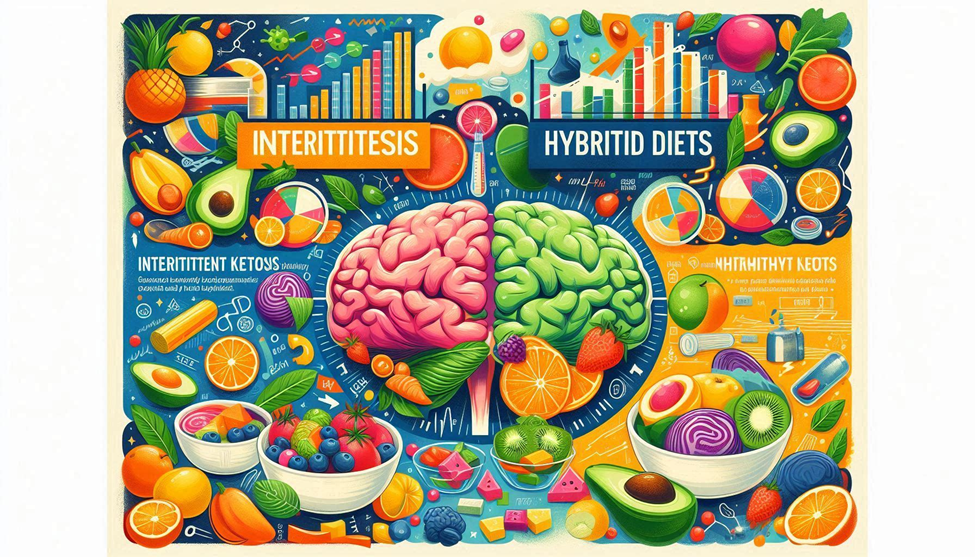
In recent years, nutrition science has entered a transformative phase—one that moves beyond the simplistic dichotomy of “low-crab” versus “high-crab.” The focus has shifted toward metabolic harmony, where flexibility and rhythmic adaptation take precedence over rigid dietary dogmas. Within this paradigm, intermittent ketosis emerges as a sophisticated nutritional model—one that marries the cognitive precision of ketogenic metabolism with the physiological versatility of a balanced, nutrient-rich diet. It represents a cyclical, adaptive dance between glucose and ketene utilization, allowing the body to toggle intelligently between two evolutionary energy systems.
Unlike the traditional ketogenic diet, which locks metabolism into perpetual fat-burning, intermittent ketosis introduces metabolic intervals—phases of low-carbohydrate intake interspersed with periods of moderate carbohydrate reintroduction. This approach honors the body’s ancestral blueprint, wherein food availability fluctuated, creating natural cycles of feast and fasting. These oscillations trained human metabolism to adapt swiftly, promoting resilience, mitochondrial renewal, and efficient energy extraction from multiple substrates.
Modern life, however, has disrupted that rhythm. Constant eating, refined carbohydrates, and perpetual insulin signaling have created metabolic monotony—dampening mitochondrial responsiveness and promoting fatigue, inflammation, and glucose instability. Intermittent ketosis aims to restore metabolic rhythm by reviving the body’s capacity for fuel flexibility. When ketenes periodically rise, they act not merely as alternative fuel but as signaling molecules, modulating gene expression, reducing oxidative stress, and enhancing neuroplasticity.
The outcome is a metabolic renaissance—a state where the body reclaims its evolutionary intelligence. By allowing intervals of cytogenesis followed by periods of replenishment, intermittent ketosis fosters balance rather than deprivation, adaptation rather than extremity. It is less a diet and more a biological rhythm—an intentional recalibration of modern metabolism toward its natural, oscillatory state of resilience and vitality.
2. The Metabolic Philosophy of Hybrid Diets
Hybrid diets that induce intermittent ketosis do not reject carbohydrates entirely; they sequence them intelligently. By cycling between periods of higher fat intake (to stimulate cytogenesis) and strategic carbohydrate reintroduction (to replenish glycogen and support thyroid function), the body learns to transition seamlessly between fuel states. This metabolic flexibility—sometimes termed “dual-fuel adaptation”—is associated with greater energy stability, improved glycolic control, and enhanced resilience to oxidative stress.
In hybrid frameworks, macronutrients become tools of timing. Protein maintains lean mass, fats drive ketene production, and carbohydrates—used judiciously—prevent hormonal down regulation. The result is a diet that encourages both cognitive precision and physical endurance without the burnout sometimes observed in strict ketogenic regimens.
3. Ketene Metabolism and Neuroenergetics
Ketenes—β-hydroxybutyrate (BHB), acetoacetate, and acetone—are not merely emergency fuels but sophisticated signaling molecules. The brain, though only 2% of body mass, consumes roughly 20% of total energy. Under glucose scarcity, ketenes provide up to 60% of that demand. Unlike fatty acids, which cannot cross the blood-brain barrier, ketenes diffuse readily and offer an efficient substrate for ATP generation with fewer reactive oxygen species (ROS).
β-hydroxybutyrate in particular serves multiple roles beyond energy. It inhibits his tone deacetylases (HDACs), thereby enhancing expression of genes related to antioxidant defense and neuronal survival. It also modulates neuroinflammatory signaling by suppressing the NLRP3 inflammasome suggesting that intermittent ketosis could serve as a neuroprotective rhythm—periodically stimulating BHB to counter low-grade inflammation and oxidative burden.
The intermittent aspect adds another layer: by cycling in and out of ketosis, the brain periodically receives both glycol tic and ketogenic signals, promoting metabolic diversity that supports cognitive adaptability.
4. Intermittent vs. Continuous Ketosis: Why Cycling Matters
Continuous ketosis—achieved by long-term carbohydrate restriction—has demonstrated therapeutic potential in epilepsy, neurodegeneration, and metabolic disorders. However, maintaining such a state indefinitely may blunt certain hormonal pathways and reduce metabolic elasticity.
Intermittent ketosis circumvents these issues. By alternating phases of carbohydrate intake (e.g., 1–2 reefed days per week or post-exercise carbohydrate windows), insulin sensitivity is preserved, lepton signaling remains functional, and thyroid output stabilizes. Studies indicate that periodic reintroduction of carbohydrates can prevent the decline in triiodothyronine (T3) often seen in chronic keno adaptation
Moreover, cycling promotes the enzymatic machinery necessary for both glucose and fat oxidation—up regulating private dehydrogenate during reefed phases and β-oxidation enzymes during ketogenic periods. The result is a dynamic, adaptive metabolism capable of responding to diverse physiological demands.
5. Hormonal Crosstalk: Insulin, Cortical, and Growth Hormone
Hormones act as the body’s metabolic language, and intermittent ketosis refines that conversation. Insulin, the gatekeeper of fuel partitioning, decreases during ketogenic phases, enabling biolysis and cytogenesis. Lower insulin also enhances growth hormone release, which further mobilizes fatty acids and supports lean mass retention.
Cortical, though often vilified, plays a pivotal role in early ketosis, mobilizing glycerol for gluconeogenesis. However, sustained cortical elevation is undesirable. The intermittent model prevents chronic stress signaling by allowing periods of carbohydrate intake, which lower cortical and restore serotonin synthesis via tryptophan availability.
Growth hormone (GH) spikes during fasting and early ketosis, amplifying autophagy and cellular repair mechanisms. When paired with strategic protein timing, intermittent ketosis can support muscle recovery and metabolic rejuvenation simultaneously.
6. Ketenes and Mitochondrial Biogenesis
Mitochondria—our cellular power plants—responds dynamically to fuel availability. Ketogenic signaling enhances mitochondrial efficiency by activating PGC-1α, AMPK, and SIRT3 pathways, leading to increased mitochondrial density and antioxidant defense.
Intermittent ketosis cycles this activation, stimulating mitophagy (the removal of damaged mitochondria) during fasting phases and mitochondrial biogenesis during reefed periods. The alternation mimics exercise-induced metabolic stress, enhancing resilience at the cellular level. This rhythm of stress and recovery aligns with heresies—the biological principle that periodic stress fosters long-term adaptation.
7. Cognitive Enhancement: Memory, Focus, and Neuroprotection
One of the most compelling reasons individuals adopt intermittent ketosis is its profound effect on cognition. Ketenes improve neuronal energy stability, particularly in glucose-hypo metabolic states such as aging, Alzheimer’s, or chronic fatigue.
Β-hydroxybutyrate elevates brain-derived neurotrophic factor (BDNF), which supports neurogenesis, synaptic plasticity, and teach. Much report enhanced focus and reduced brain fog during mild ketosis—a state of calm alertness driven by stabilized neurotransmitter ratios between GABA and glutamate.
Moreover, intermittent ketosis reduces neuroinflammation and oxidative stress—two key contributors to cognitive decline. By oscillating between carbohydrate metabolism (which drives dopamine activity) and ketene metabolism (which stabilizes GABAergic tone), the brain experiences balanced petrochemical modulation.
8. Physical Performance and Metabolic Flexibility
While traditional ketogenic diets once carried the stigma of reduced athletic performance, intermittent ketosis rewrites the narrative. Athletes can strategically enter ketosis during low-intensity endurance phases to maximize fat oxidation and then reintroduce carbohydrates before high-intensity bouts to replenish glycogen stores.
This dual-fuel model enhances metabolic flexibility—a key predictor of performance longevity. Mitochondria trained to oxidize both fat and glucose can sustain energy over longer durations with fewer inflammatory byproducts
Additionally, ketenes themselves improve muscle recovery by lowering oxidative stress and increasing muscle glycogen resynthesis efficiency post-reefed. Hybrid athletes—those combining resistance and endurance—benefit particularly from intermittent ketosis, which offers both lean mass preservation and extended energy yield.
9. Practical Hybrid Diet Models
Intermittent ketosis can be achieved through various structured patterns, each offering unique physiological benefits:
- Cyclical Ketogenic Diet (CKD): 5–6 days of low-crab, high-fat intake followed by 1–2 high-crabs reefed days. Ideal for athletes needing glycogen restoration.
- Targeted Ketogenic Diet (TKD): Small carbohydrate doses timed around workouts to support anaerobic performance while maintaining overall ketosis.
- Intermittent Fasting Ketosis (IFK): Ketosis achieved daily through time-restricted feeding (e.g., 16:8 or 18:6), allowing metabolic flexibility without strict macronutrient ratios.
- Hybrid Mediterranean-Kato Model: Combines ketogenic macronutrient ratios with polyphone-rich, anti-inflammatory foods (olive oil, fish, and vegetables, herbs) to optimize cardio metabolic health.
Each model emphasizes periodicity, nutrient quality, and flexibility, ensuring ketosis remains a tool, not a trap.
10. Risks, Limitations, and Personalized Adaptation
Despite its advantages, intermittent ketosis requires nuanced implementation. Those with adrenal insufficiency, thyroid dysfunction, or insulin-dependent diabetes must approach it cautiously. Electrolyte imbalances (sodium, magnesium, potassium) are common during early adaptation phases.
Women, particularly those of reproductive age, may experience hormonal fluctuations under prolonged carbohydrate restriction. Hence, cyclical reseeding and stress modulation are critical components.
Furthermore, not all brains respond identically to ketene metabolism—individual differences in MCT transporter efficiency and mitochondrial enzyme expression can influence adaptation speed. Genetic testing and metabolic tracking (via blood hob levels or respiratory quotient analysis) may guide personalized optimization.
11. Emerging Frontiers: Ketenes as Therapeutics
Beyond diet, exogenous ketenes and ketene esters are being explored for therapeutic use in neurological disorders, traumatic brain injury, and metabolic syndrome. These compounds allow transient ketosis without strict dietary compliance. Early data indicate cognitive enhancement and reduced inflammatory biomarkers even in non-fasting.
Future hybrid diets may combine nutritional ketosis with intermittent fasting, polyphone supplementation, and circadian alignment to synchronize mitochondrial metabolism with hormonal cycles. This integrated approach could redefine preventive neurometabolic medicine.
Conclusion
Intermittent ketosis is not a fad—it is the rediscovery of metabolic rhythm, the physiological poetry of alternating fuels that once defined human survival. It represents the elegant choreography between glucose and ketene utilization, where the body shifts not out of deprivation, but out of design. These transitions create cycles of metabolic diversification, training mitochondria to adapt, communicate, and regenerate. In this oscillation lies renewal: the brain learns to stabilize energy under dual conditions; the muscles learn to sustain effort through efficiency rather than excess; and the endocrine system learns to synchronize hunger, satiety, and repair through rhythm, not rigidity.
In a world of constant consumption, where eating has become reflex rather than ritual, intermittent ketosis reintroduces metabolic silence—the space between meals where biochemistry breathes. During this silence, cellular autophagy awakens, damaged mitochondria are recycled, and inflammation gives way to repair. It is a return to biological contrast: feeding and fasting, energy and stillness, stimulation and restoration. This rhythmic polarity mirrors the natural cycles of day and night, activity and rest, abundance and scarcity.
The hybrid diet model therefore honors evolution’s wisdom. It reminds us that resilience is not built in monotony but in modulation. The human organism was never meant to run indefinitely on one substrate or one pace of living. Intermittent ketosis offers both metabolic diversity and adaptability—the ability to thrive in transition. It is the bridge between the ancestral and the modern, between ancient fasting rhythms and contemporary nutritional precision. In its essence, it is not a diet at all, but a dialogue with metabolism—a way of reclaiming flexibility, clarity, and endurance through the intelligent interplay of fluctuation.
SOURCES
Newman, J., & Verdi, E. (2014). Ketene bodies as signaling metabolites. Nature Reviews Endocrinology.
You, Y.-H., et al. (2015). The ketene metabolite β-hydroxybutyrate blocks NLRP3 inflammasome–mediated inflammation. Nature Medicine.
Harvey, C. J., et al. (2019). Thyroid hormone adaptation in ketogenic states. Endocrine Connections.
Vole, J. S., & Piney, S. D. (2017). The art and science of low carbohydrate performance. Beyond Obesity LLC.
Ho, K. K., et al. (2020). Growth hormone dynamics during fasting and ketogenic adaptation. Journal of Clinical Endocrinology & Metabolism.
Verdi, E. (2015). The many faces of sit-ins: mitochondrial regulation and longevity. Cell Metabolism.
Suleiman, S. F., et al. (2016). Exercise and BDNF regulation via β-hydroxybutyrate. Cell Metabolism.
Burke, L. M., et al. (2021). Adaptations to ketogenic diets in athletes. Sports Medicine.
Stubbs, B. J., et al. (2018). Exogenous ketene supplements and performance. Frontiers in Physiology.
Paoli, A., et al. (2020). Ketogenic diet and metabolic flexibility. Nutrients.
Cahill, G. F. (2006). Fuel metabolism in starvation. Annual Review of Nutrition.
Puff, A. M., et al. (2019). Ketene metabolism and cancer therapy. Frontiers in Nutrition.
Cerenkov, M. C., et al. (2021). Ketogenic diet and epilepsy management. Lancet Neurology.
Koshigaya, Y., et al. (2013). Ketenes as alternative fuel for the brain. PNAS.
Santos, F. L., et al. (2018). Effect of ketogenic diets on metabolic syndrome markers. British Journal of Nutrition.
Meatloaf, M., et al. (2009). Ketenes and neuronal excitability. Journal of Neurochemistry.
Rho, J. M. (2017). Neuroprotective mechanisms of ketosis. Epilepsies.
Michelson, K. H., et al. (2015). Ketene metabolism and energy efficiency. FASEB Journal.
Evans, M., et al. (2017). MCT supplementation and cognitive performance. Nutrition & Metabolism.
D’Agostino, D. P., et al. (2013). Ketene bodies and brain resilience. Frontiers in Neuroscience.
Roberts, M. N., et al. (2017). Ketogenic diet enhances longevity and cognition in mice. Cell Metabolism.
Ruskin, D. N., et al. (2018). Neuroprotection through ketogenic cycling. Experimental Neurology.
Myette-Côté, É. et al. (2018). Ketenes and insulin sensitivity. Diabetologia.
Jensen, N. J., et al. (2020). Exogenous ketenes and neuroenergetics. Frontiers in Aging Neuroscience.
Tender, D., et al. (2019). Hormonal and metabolic effects of cyclical ketogenic diets. Endocrine Reviews.
HISTORY
Current Version
Nov 07, 2025
Written By
ASIFA