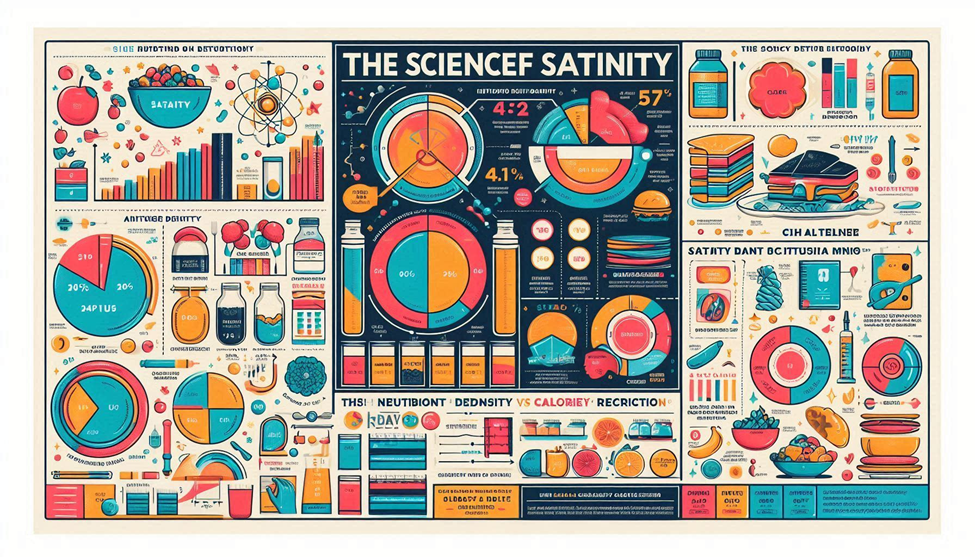
1. Introduction: The Hunger Paradox
Hunger is not simply the body’s signal for food — it’s a biochemical symphony orchestrated by hormones, neural feedback, nutrient sensors, and even emotional cues. Yet modern nutrition debates often reduce this complexity to a single number: calories.
For decades, calorie restriction has been upheld as the gold standard for weight management. The logic seems intuitive — eats less, lose weight. But the body is not a calculator; it is a dynamic biological system designed for survival, not arithmetic. Emerging nutritional science reveals that what we eat may matter more than how much we eat when it comes to satiety, metabolism, and long-term health.
The real key lies in nutrient density — the concentration of essential nutrients per calorie. A plate rich in protein, fiber, and phytonutrients communicates fullness more effectively to the brain than an is caloric portion of processed food. In other words, quality drives quantity control.
Satiety, therefore, is not about suppression but sufficiency — the body’s recognition that its biochemical needs have been met.
2. Understanding Satiety Signals: Beyond Calories
Satiety is the physiological sensation of fullness that follows eating and suppresses further intake. But this seemingly simple state involves a network of hormones, neural circuits, and metabolic pathways fine-tuned over millennia of human evolution.
2.1 The Short-Term Feedback Loop
After food enters the stomach, stretch receptors signal fullness via the vague nerve, while the release of cholecystokinin (CCK) from the small intestine slows gastric emptying and enhances satisfaction. GLP-1 and PYY, secreted from the gut in response to protein and fat, further dampen appetite by acting on the hypothalamus.
2.2 The Long-Term Energy Balance
Hormones such as leptin, produced by fat cells, and insulin, secreted by the pancreas, inform the brain about long-term energy stores. In theory, high leptin levels should suppress hunger, but in many people with obesity, lepton resistance blunts this feedback, leading to persistent cravings despite energy surplus.
2.3 The Reward Pathway
Food doesn’t just feed cells; it feeds emotion. The dopamine-reward system reinforces pleasurable eating behaviors. Hyper palatable foods — those rich in sugar, fat, and salt — over stimulate this circuitry, making us eat beyond physical need.
Thus, satiety involves three layers:
- Mechanical fullness (stomach distension),
- Chemical signaling (hormones and nutrients),
- Neural satisfaction (pleasure and reward).
When these systems are synchronized, appetite regulation feels effortless. When disrupted, caloric control becomes a constant struggle.
3. Nutrient Density: The Missing Metric in Modern Dieting
Calorie restriction measures energy input; nutrient density measures biological value. A 500-calorie fast-food meal may contain negligible micronutrients compared to a 500-calorie whole-food meal with vegetables, lean protein, and healthy fats.
Nutrient density is often expressed as the ratio of micronutrients (vitamins, minerals, phytonutrients, and essential amino/fatty acids) to energy. Foods high in this ratio support optimal cellular function, reduce oxidative stress, and enhance metabolic efficiency.
3.1 Micronutrients as Metabolic Modulators
Deficiencies in magnesium, zinc, B vitamins, or omega-3 fatty acids can impair energy metabolism, mood regulation, and insulin sensitivity — all of which affect hunger and cravings.
For example:
- Magnesium influences glucose regulation and the activity of lepton.
- Zinc modulates gherkin, the “hunger hormone.”
- B vitamins are co-factors for neurotransmitters that signal satisfaction.
Thus, under nutrition can exist even in caloric abundance — a state often described as “hidden hunger.”
3.2 Nutrient Density and the Satiety Cascade
Foods rich in nutrients and fiber trigger the satiety cascade — a series of physiological processes that prolong fullness. This includes delayed gastric emptying, hormonal signaling, and sustained energy release.
Whole grains, legumes, fish, nuts, and colorful vegetables not only meet nutrient demands but also communicate “completeness” to the brain’s satiety centers.
3.3 The Nutrient Density Index
Systems like the ANDI (Aggregate Nutrient Density Index) and Nutrient Rich Foods Index (NRF) score foods based on their nutrient-per-calorie ratio. Leafy greens, berries, and legumes consistently top the list, underscoring that plant-centric diversity supports biological satiety.
4. Calorie Restriction: Benefits, Risks, and Misconceptions
Calorie restriction — typically reducing energy intake by 20–40% — has shown remarkable benefits in longevity studies involving animals. It can improve insulin sensitivity, lower oxidative stress, and promote autophagy.
However, translating calorie restriction to humans presents complications.
4.1 Metabolic Adaptation: The Survival Mechanism
The body perceives caloric reduction as a potential threat. In response, resting metabolic rate (RMR) decreases, thyroid hormones decline, and energy expenditure adapts downward — a process called adaptive thermo genesis.
This makes continued weight loss progressively harder. Moreover, chronic restriction may elevate cortical levels, leading to stress-induced overeating or rebound weight gain.
4.2 Hormonal Disruptions and Appetite Compensation
Prolonged restriction reduces lepton, thyroid hormones, and reproductive hormones (especially in women). Gherkin levels rise, intensifying hunger. Even after weight loss stabilizes, these hormonal shifts can persist for months, explaining why many individuals regain lost weight.
4.3 Psychological Cost of Chronic Restriction
Beyond biology, calorie restriction can induce cognitive preoccupation with food, mood instability, and social withdrawal. Restriction often transforms eating into a moral struggle rather than a physiological process. This is why many modern nutritionists advocate for nutrient-guided satiety rather than calorie-imposed deprivation.
5. The Neurobiology of Fullness: Brain Meets Biochemistry
Satiety is ultimately a neural decision made by the hypothalamus, influenced by gut hormones, blood glucose levels, and sensory memory of food.
5.1 The Hypothalamic Orchestra
The actuate nucleus integrates hunger and satiety signals. Nutrients such as glucose and amino acids activate specific neuronal pathways, modulating appetite intensity.
Protein intake, in particular, increases gut hormones that signal fullness more effectively than carbohydrates or fats.
5.2 Guts-Brain Axis Communication
The micro biome plays a surprising role in satiety. Short-chain fatty acids (SCFAs), produced from fiber fermentation, enhance the release of PYY and GLP-1 and improve insulin sensitivity. Symbiosis, on the other hand, can blunt these signals and promote inflammation-driven hunger.
5.3 Sensory-Specific Satiety
The brain’s reward system habituates to repetitive flavors, driving the desire for novelty. This “sensory-specific satiety” explains why variety in processed foods can lead to overeating, while simplicity in whole-food meals encourages natural limits.
6. The Role of Protein, Fiber, and Micronutrients in Satiety
Not all calories are created equal when it comes to fullness. The macronutrient composition of meals strongly determines post-meal satisfaction.
6.1 Protein: The King of Satiety
Among macronutrients, protein has the highest satiety index. It stimulates key appetite-suppressing hormones and supports lean mass preservation during weight loss.
High-protein meals reduce subsequent energy intake and stabilize blood sugar. The “protein leverage hypothesis” suggests that humans eat until protein needs are met — and excess energy intake often arises when diets are diluted in protein.
6.2 Fiber: The Forgotten Fullness Factor
Dietary fiber expands gastric volume, delays digestion, and promotes SCFA production. Soluble fibers such as beta-gleans and glucomannan have been shown to significantly enhance satiety and reduce caloric intake.
6.3 Micronutrients and Appetite Regulation
Micronutrients act as cofactors in neurotransmitter synthesis and hormone regulation. Deficiencies in iron, vitamin D, magnesium, or chromium can mimic hunger symptoms through fatigue or altered glucose metabolism.
Thus, achieving true satiety requires meeting metabolic sufficiency, not merely stomach volume.
7. Satiety Index Foods and the Art of Meal Design
In the mid-1990s, researchers developed the Satiety Index, ranking foods by their ability to satisfy hunger per calorie. Whole, unprocessed foods — such as boiled potatoes, fish, oats, apples, and beans — topped the list. Pastries, chips, and candy scored lowest.
7.1 The Satiety Index Hierarchy
| Food Group | Satiety Power (per calorie) | Key Mechanism |
| Boiled potatoes | Very High | Water, fiber, resistant starch |
| Eggs, fish, chicken | High | Protein, amino acid signaling |
| Oats, legumes | Moderate-High | Soluble fiber, slow glucose release |
| Fruits (apple, orange) | Moderate | Pectin, volume, natural sweetness |
| Pastries, processed snacks | Low | Refined crabs, low fiber/protein |
7.2 The 3-Dimensional Meal Framework
A satiety-optimized meal balances three pillars:
- Protein: 25–35% of total energy
- Fiber: ≥25g daily, from vegetables, fruits, legumes
- Healthy fats: 20–35% of total energy for hormonal balance
Visual design matters too. Volumetric meals — those high in water and fiber content — allow large portions with moderate energy density. Soups, salads, and cooked vegetables deliver visual abundance and biochemical satisfaction.
7.3 Timing and Satiety Rhythms
Meal timing affects hormonal peaks. High-protein breakfasts enhance daytime satiety and stabilize glucose. Conversely, skipping breakfast often leads to compensatory overeating later.
Chrononutrition — aligning meals with circadian rhythms — further enhances lepton and insulin sensitivity.
8. Practical Applications for Sustainable Eating
8.1 The Shift from Restriction to Repletion
Instead of “How little can I eat?” the modern nutrition paradigm asks, “How completely can I nourish?”
A nutrient-dense approach prioritizes foods that provide maximal satiety and minimal metabolic disruption.
Key Strategies:
- Center each meal on whole proteins (eggs, fish, and legumes).
- Add fiber-rich sides — vegetables, lentils, or oats.
- Include healthy fats (olive oil, avocado, nuts) to stabilize hunger.
- Hydrate adequately — mild dehydration often mimics hunger.
8.2 The Role of Mindful Eating
Satiety is sensory as well as chemical. Slower eating enhances cephalic-phase responses, allowing the brain time to register fullness.
Mindful eating — focusing on texture, aroma, and flavor — reduces caloric intake without conscious restriction.
8.3 Personalized Satiety Responses
Satiety varies by genetics, micro biome, and metabolic flexibility. Some individuals experience stronger fullness signals from protein, others from fat or fiber. Personalized nutrition technology is now mapping these responses through continuous glucose monitoring and micro biome profiling.
Conclusion
Satiety is not a number; it’s a living dialogue between nutrients, hormones, and neurobiology — a continuous feedback loop that determines not only when we stop eating, but how deeply nourished we feel. Each meal sets off a biochemical symphony involving gherkin, lepton, insulin, and serotonin, all communicating through the gut-brain axis. When the body receives nutrient-rich foods — those dense in fiber, phytonutrients, essential fats, and high-quality protein — these messengers harmonize, signaling a natural sense of satisfaction that endures beyond calories.
Calorie restriction, by contrast, silences the conversation. It creates a temporary illusion of control, often leading to metabolic slowdown, hormonal imbalance, and psychological preoccupation with food. The body perceives scarcity and responds by amplifying hunger cues, reducing energy expenditure, and intensifying cravings. Nutrient density, on the other hand, restores metabolic peace — where hunger quiets naturally, energy stabilizes, and the mind regains its calm.
True fullness is holistic. It arises when physiological sufficiency meets emotional balance and sensory pleasure. A meal that delights the palate while replenishing micronutrient reserves creates a state of nourishment that extends into mood, focus, and resilience.
The future of nutrition is not built on austerity or deprivation, but on intelligent nourishment — a model that honors both biology and psychology. Every bite becomes an opportunity to communicate safety, abundance, and equilibrium to the body, redefining wellness not as the absence of hunger, but the presence of inner balance.
SOURCES
Rolls, B. J. (2017). The Role of Energy Density in the Overconsumption of Fat. Journal of Nutrition and Metabolism.
Blundell, J. E. (2010). Satiety: From Physiological Mechanisms to Food Choice. Nutrition Bulletin.
Hall, K. D. (2016). Metabolic Adaptations to Weight Loss: Implications for the Athlete and the Dieter. Obesity Reviews.
Westerterp-Plantenga, M. S. (2012). Protein Intake and Energy Balance Regulation. Physiology & Behavior.
Neither Ray nor, H. A. (2018). Dietary Variety, Energy Regulation, and Weight Control. Physiology & Behavior.
Mattes, R. D. (2014). Food Energy Density and Its Role in Energy Regulation. Physiology & Behavior.
Stubbs, R. J. (2018). Hunger and Satiety: From Physiology to Nutritional Solutions. Proceedings of the Nutrition Society.
Pardon-Jones, D. (2015). Protein and Muscle Health in Weight Management. Current Opinion in Clinical Nutrition and Metabolic Care.
Farah, N. M. (2020). The Interplay between Micronutrients and Satiety Signaling. Nutrition Reviews.
Holt, S. H. A. (1995). A Satiety Index of Common Foods. European Journal of Clinical Nutrition.
Buckland, N. J. (2021). Food Reward and Satiety: Psychological and Neurobiological Dimensions. Appetite.
Satrap, A. (2019). The Role of Protein, Fiber, and Water in Satiety and Weight Regulation. Nutrients.
Rabin, A. (2015). Glycolic Index and Satiety: Relevance for Weight Management. British Journal of Nutrition.
Kissileff, H. R. (2013). Human Eating Behavior and Appetite Regulation. Physiology & Behavior.
Vainer, U. (2019). Individual Differences in Satiety Response and Obesity Risk. Appetite.
Cannon, C. P. (2016). Metabolic Efficiency: Balancing Calorie Intake and Nutrient Value. Advances in Nutrition.
Finkelstein, E. A. (2020). Dietary Energy Density and Public Health Implications. Annual Review of Nutrition.
Leidy, H. J. (2013). The Role of Breakfast Composition in Appetite Control and Energy Balance. Obesity.
Berthoud, H. R. (2011). Neurobiology of Food Intake Control: Integrating Signals for Satiety. Nature Reviews Neuroscience.
Sumatran, P. (2011). Hormonal Adaptations to Weight Loss and Satiety Regulation. New England Journal of Medicine.
Ludwig, D. S. (2020). Carbohydrate Quality, Insulin Response, and Hunger. JAMA.
Guyenne, S. J. (2017). The Hungry Brain: Outsmarting the Instincts That Make Us Overeat. Flatiron Books.
Poppet, S. D. (2018). Dietary Energy Density and Its Impact on Satiety and Energy Intake. Obesity Reviews.
Sacks, F. M. (2009). Comparison of Weight-Loss Diets with Different Compositions of Fat, Protein, and Carbohydrates. New England Journal of Medicine.
Westerner, K. R. (2018). Energy Expenditure, Energy Intake, and the Regulation of Body Weight. Physiology Reviews.
HISTORY
Current Version
Nov 04, 2025
Written By
ASIFA