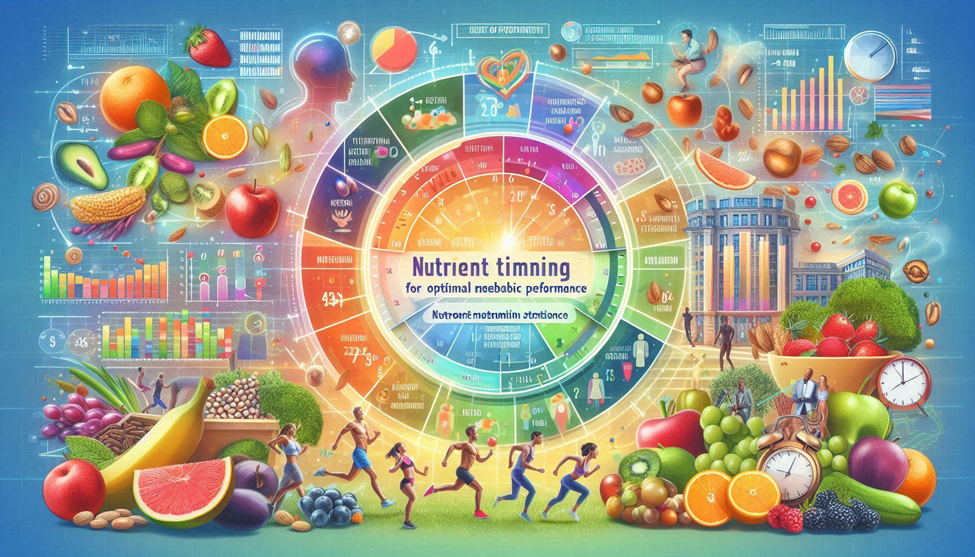
Introduction: The Clock within Metabolism
Nutrition is no longer just about what or how much I eat—it’s about when we eat. The body’s metabolic machinery is orchestrated by a network of internal clocks that determine how efficiently we process carbohydrates, fats, and proteins throughout the day. Nutrient timing recognizes this biological rhythm and leverages it to optimize energy utilization, recovery, and body composition.
Across evolutionary history, humans evolved to synchronize feeding with daylight and rest cycles. Yet, modern eating patterns—characterized by late-night snacking, irregular meals, and around-the-clock caloric availability—have disrupted this harmony. The emerging science of chrononutrition and nutrient timing suggests that aligning our meals with the body’s natural circadian rhythm enhances metabolic efficiency, hormonal balance, and physical performance.
Peak metabolic performance, therefore, is not merely the product of training or calorie balance—it’s the outcome of temporal precision in eating. When nutrients arrive at the right time, they amplify anabolic pathways, minimize fat storage, stabilize blood glucose, and optimize mitochondrial energy production.
1. The Science of Circadian Nutrition
1.1 The Body’s Metabolic Clock
Every organ, from the liver to skeletal muscle, operates under a molecular clock synchronized by the suprachiasmatic nucleus (SCN) in the brain. This master clock responds primarily to light, but peripheral clocks are profoundly influenced by feeding times.
- The liver clock regulates glucose output and lipid metabolism.
- The muscle clock governs insulin sensitivity and glycogen storage.
- The adipose clock influences fat mobilization and thermo genesis.
When we eat at times that conflict with these biological rhythms—for example, heavy meals at night—metabolic efficiency declines. Glucose tolerance, insulin sensitivity, and fat oxidation all fluctuate diurnally, peaking during daylight and tapering at night.
1.2 The Metabolic Cost of Mistimed Eating
Irregular meal timing desynchronizes these clocks. Studies show that late-night eating increases postprandial glucose levels, suppresses fat oxidation, and alters lepton and gherkin patterns—hormones critical for appetite regulation. Chronic misalignment, such as shift work or frequent jet lag, heightens the risk of obesity, type 2 diabetes, and metabolic syndrome.
1.3 Aligning Nutrition with Chronobiology
To achieve metabolic harmony, meals should be strategically timed to the body’s metabolic readiness:
- Morning: The ideal window for carbohydrate intake due to higher insulin sensitivity.
- Midday: Balanced macronutrient meals support sustained energy and stable glucose.
- Evening: Emphasize proteins and non-starchy vegetables to enhance recovery without glucose spikes.
This synchronization—known as chromo-aligned nutrition—maximizes the efficiency of nutrient partitioning, where calories are directed toward energy and muscle synthesis rather than fat storage.
2. Nutrient Timing in Exercise Physiology
2.1 Pre-Workout Fueling: Preparing the Metabolic Engine
The goal of pre-exercise nutrition is to ensure adequate glycogen stores, maintain plasma glucose, and optimize amino acid availability. The ideal meal should be consumed 2–3 hours before training, containing a balance of complex carbohydrates, lean proteins, and minimal fats for digestibility.
- Carbohydrates: 1–2 g/kg of body weight enhances glycogen saturation.
- Protein: 20–30 g of high-quality protein primes muscle amino acid pools.
- Hydration: 400–600 mol of water or an electrolyte solution 2 hours prior enhances thermoregulation.
A pre-workout snack 30–60 minutes before exercise can further sustain performance. Examples include banana with whey protein, oatmeal with Greek yogurt, or rice cakes with nut butter.
2.2 Intra-Workout Nutrition: Sustaining Performance
During prolonged endurance or resistance sessions exceeding 90 minutes, intra-workout fueling preserves glycogen and delays fatigue.
- Carbohydrate intake: 30–60 g/hour from easily digestible sources (sports gels, isotonic drinks).
- Electrolytes: Maintain sodium and potassium balance to prevent dehydration-induced fatigue.
In resistance training, intra-session amino acid intake may reduce muscle breakdown and promote sustained performance.
2.3 Post-Workout Recovery: The Anabolic Window Revisited
The once-sacred “30-minute anabolic window” has evolved into a broader concept: the post-exercise recovery phase spanning 2–4 hours. During this window, glycogen syntheses activity and muscle protein synthesis are heightened.
- Carbohydrates: 1–1.5 g/kg body weight within 2 hours post-exercise replenishes glycogen.
- Protein: 0.3 g/kg of high-quality protein (e.g., whey isolate, egg, or soy) enhances muscle repair.
- Lucien threshold: 2.5–3 g of leonine triggers maximal motor activation, promoting muscle synthesis.
Pairing carbohydrates and protein (3:1 ratio) further amplifies insulin-mediated amino acid transport and glycogen resynthesis.
2.4 Nighttime Recovery Nutrition
For athletes training in the evening, pre-sleep nutrition becomes critical. A slow-digesting casein protein (30–40 g) supports overnight muscle repair and mitigates catabolism. Incorporating magnesium and tryptophan-rich foods like yogurt or cottage cheese also enhances sleep quality—an essential pillar of metabolic recovery.
3. Hormonal Rhythms and Nutrient Timing
3.1 Insulin and Cortical Dynamics
Cortical peaks in the early morning to mobilize energy substrates for daily activity. Eating breakfast during this phase complements the body’s readiness for nutrient assimilation. Conversely, eating late at night when cortical is low but melatonin is high blunts metabolic responsiveness and favors fat storage.
Insulin sensitivity follows a circadian rhythm—highest in the morning, lowest in the evening. Thus, distributing more carbohydrates earlier in the day aligns with glucose efficiency.
3.2 Growth Hormone and Protein Timing
Growth hormone secretion occurs predominantly during early sleep cycles, amplifying protein synthesis and biolysis. Consuming protein-rich meals before bed (particularly casein or milk proteins) provides amino acids for this nocturnal anabolic surge.
3.3 Lepton, Gherkin, and Appetite Synchrony
Lepton, the satiety hormone, peaks during nighttime fasting, while gherkin, the hunger signal, rises before meals. Frequent grazing blunts these oscillations, leading to deregulated appetite and fat gain. Structured meal timing (3–4 meals per day with defined fasting intervals) reestablishes hormonal coherence, enhancing both metabolic control and intuitive eating patterns.
4. Intermittent Fasting and Time-Restricted Feeding
4.1 The Metabolic Basis of Fasting Windows
Intermittent fasting (IF) and time-restricted feeding (TRF) utilize the body’s fasting physiology to enhance fat oxidation, mitochondrial biogenesis, and insulin sensitivity. During fasting states, metabolic flexibility improves as the body transitions from glucose to fat-derived energy.
4.2 The Ideal Fasting Ratio
Most metabolic benefits appear within 14:10 or 16:8 fasting windows (hours fasted: fed). Early time-restricted feeding (eating between 8 a.m. and 4 p.m.) has shown superior outcomes for glucose regulation and circadian alignment compared to late-eating windows.
4.3 Fasted Training: Pros and Cons
Fasted morning training can enhance fat oxidation but may compromise power output or recovery if glycogen is low. For endurance athletes, periodic fasted sessions can improve mitochondrial efficiency, but resistance athletes may benefit from pre-fueled sessions to maximize hypertrophy.
4.4 Reseeding and Metabolic Reset
Breaking the fast should involve nutrient-dense meals rich in complex crabs, lean proteins, and phytonutrients. The first meal after fasting sets the day’s metabolic tone, influencing insulin response and satiety hormones.
5. Macronutrient Timing: Beyond Calories
5.1 Carbohydrate Timing for Energy and Recovery
Carbohydrates are most efficiently metabolized during active hours. Morning and midday carbohydrate intake supports glycogen replenishment and cognitive alertness. Evening carbohydrate restriction enhances fat oxidation and glycolic stability during sleep.
Strategic carbohydrate loading before endurance events or post-workout periods replenishes muscle glycogen stores critical for performance and recovery.
5.2 Protein Distribution across the Day
Instead of concentrating protein in one meal, distributing 0.25–0.4 g/kg per meal across 3–5 eating occasions optimizes muscle protein synthesis. Combining fast- and slow-digesting proteins supports both immediate and sustained anabolism.
5.3 Fat Timing and Metabolic Flexibility
Healthy fats—omega-3s, MCTs, and monounsaturated oils—support satiety and hormonal balance. However, consuming heavy fat meals immediately pre-workout can delay digestion and reduce exercise comfort. Evening intake of omega-3s or avocado-based meals supports recovery by reducing inflammation.
6. Nutrient Timing for Different Goals
- For Muscle Gain
- Pre-workout: Balanced protein and crab intake for training fuel.
- Post-workout: High-leonine protein and crabs for anabolic recovery.
- Night: Casein or dairy-based protein for overnight synthesis.
- For Fat Loss
- Morning: Light, protein-rich meals to stabilize insulin.
- Training: Low-crab or fasted cardio enhances fat oxidation.
- Evening: Vegetables, lean proteins, and fats to reduce insulin load.
- For Endurance Athletes
- Pre-event: Carbohydrate loading 24–48 hours prior enhances glycogen reserves.
- During event: 30–90 g crabs per hour to sustain performance.
- Post-event: Rapid glycogen replenishment with carbohydrate-electrolyte blends.
7. Chrononutrition and Sleep Metabolism
Sleep and metabolism are inseparable. Eating too close to bedtime delays melatonin release, elevates body temperature, and impairs fat oxidation during sleep. Conversely, balanced evening meals support recovery and hormonal repair.
7.1 The Role of Evening Meals
A light dinner emphasizing protein, fiber, and minimal refined crabs promotes stable nocturnal glucose. Incorporating tryptophan- and magnesium-rich foods—such as turkey, yogurt, and leafy greens—enhances serotonin and melatonin synthesis, improving sleep depth.
7.2 The Nocturnal Fast
A 12–14-hour overnight fasting window allows metabolic resetting, autophagy activation, and improved morning insulin sensitivity. This rhythm supports mitochondrial renewal and longevity-related pathways.
8. Integrating Nutrient Timing into Daily Life
8.1 Consistency over Perfection
The success of nutrient timing depends on consistent alignment with biological rhythms. Regular meal times stabilize blood sugar and hormone secretion, reducing cravings and metabolic stress.
8.2 Personalization by Phonotype
“Morning larks” and “night owls” exhibit different circadian patterns. Tailoring meal timing to individual chronotypes—while maintaining circadian respect—enhances sustainability and compliance.
8.3 The Real-World Strategy
A practical daily timing model:
- 7:30 a.m. – Breakfast (complex crabs, protein, hydration)
- 12:30 p.m. – Lunch (balanced macronutrients)
- 4:00 p.m. – Snack (protein + fruit)
- 7:00 p.m. – Dinner (lean protein + vegetables)
- 10:00 p.m. – Optional casein shake for recovery
Conclusion
Nutrient timing transforms eating from a habitual act into a precise metabolic strategy. It redefines nutrition as an act of alignment—between physiology and chronology, energy and intention. When we honor the body’s internal clock, every meal becomes a message that instructs metabolism when to burn, when to build, and when to rest. This synchronization harmonizes energy flow, stabilizes hormonal rhythms, and enhances cellular repair. Instead of overwhelming the system with random feeding cues, nutrient timing introduces a rhythm that mirrors our biological design.
When properly executed, this approach amplifies physical and cognitive performance. Muscles recover more efficiently, glycogen stores replenish faster, and mitochondrial energy output becomes more stable throughout the day. Insulin sensitivity improves, appetite stabilizes, and the rollercoaster of energy highs and crashes gives way to sustained vitality. Beyond the physiological, nutrient timing cultivates awareness—it encourages mindfulness toward how the timing of nourishment influences focus, sleep quality, and emotional balance.
Peak metabolic performance, therefore, is not merely about caloric restriction or abundance; it is about precision. By eating in resonance with the body’s natural rhythms, we shift from reactive to intelligent metabolism—one that conserves energy during rest and releases it optimally during demand. Over time, this rhythm shapes a state of metabolic intelligence, where energy is no longer stored inefficiently as fat but directed toward movement, growth, and renewal.
Ultimately, peak performance is not achieved by eating more or less—it is achieved by eating smarter in time: transforming food into information that the body understands, and timing into the unseen key that unlocks the full potential of human metabolism.
SOURCES
Ivy, J. L. (2004) – Journal of Applied Physiology. Nutrient timing and exercise metabolism.
Aragon, A. A. & Schoenfeld, B. J. (2013) – Journal of the International Society of Sports Nutrition. Nutrient timing revisited: pre- and post-exercise strategies.
Bass, J. & Lazar, M. A. (2016) – Cell Metabolism. Circadian regulation of glucose and lipid homeostasis.
Johnston, J. D. (2019) – Nature Reviews Endocrinology. The role of chrononutrition in metabolic health.
Jakubowicz, D. et al. (2017) – American Journal of Clinical Nutrition. Timing of macronutrient intake and insulin sensitivity.
Moore, D. R. et al. (2009) – Journal of the International Society of Sports Nutrition. Protein distribution and muscle protein synthesis.
St-One, M. P. et al. (2016) – Sleep Medicine Reviews. Impact of late-night eating on sleep quality and metabolism.
Jam shed, H. et al. (2019) – Nutrients. Time-restricted feeding and metabolic flexibility.
Chtourou, H. & Suisse, N. (2012) – Frontiers in Physiology. The interaction between exercise timing and circadian rhythms.
Asher, G. & Sassone-Corsi, P. (2015) – Journal of Biological Rhythms. Peripheral clocks and nutrient sensing.
De Bock, K. et al. (2005) – Sports Medicine. Fasted versus fed training: effects on performance and adaptation.
Anima, R. S. & Flier, J. S. (2000) – Advances in Nutrition. Lepton and gherkin in appetite and meal timing control.
Tipton, K. D. et al. (2007) – Annual Review of Nutrition. Macronutrient timing and hormonal response.
Moat, M. C. et al. (2016) – Current Opinion in Clinical Nutrition and Metabolic Care. Phonotype-specific meal timing and metabolic health.
Burke, L. M. et al. (2017) – Medicine & Science in Sports & Exercise. Glycogen resynthesis and recovery nutrition.
Schemer, F. A. et al. (2009) – The Lancet Diabetes & Endocrinology. Circadian misalignment and metabolic disorders.
Res, P. T. et al. (2012) – British Journal of Nutrition. Protein timing before sleep for overnight recovery.
Arête, J. L. et al. (2013) – European Journal of Sport Science. Nutrient timing in resistance and endurance training.
Leidy, H. J. et al. (2015) – Nutrition Reviews. The science of meal frequency and metabolic rate.
Kalsbeek, A. et al. (2014) – Metabolism: Clinical and Experimental. Cortical, insulin, and temporal eating patterns.
Pot, G. K. (2018) – Journal of Human Nutrition and Dietetics. Real-world applications of nutrient timing.
Chill, A. W. et al. (2017) – Appetite. Eating behavior, circadian rhythm, and hormonal regulation.
Panda, S. (2016) – Trends in Endocrinology & Metabolism. Integration of fasting, feeding, and circadian systems.
HISTORY
Current Version
Nov 04, 2025
Written By
ASIFA